We The Arts: Civic Engagement Through Artis an ArtsEd4All project taking place from June 17 – July 4, 2023, in celebration of Civic Season 2023.
From Juneteenth to the 4th of July, we invite you to participate in the third annual #CivicSeason through self-guided public art visits in San Francisco, as well as in-person and online events that invite civic engagement through the arts. We’re teaming up with hundreds of history museums and sites across the country through @HistoryMadeByUs, in partnership with the next generation shaping our democracy to launch a new tradition that makes room for all of our stories – and write the next chapter together.
FREE – Saturday, JUNE 17, 2 pm – 8 pm Healdsburg Plaza, Corner of Healdsburg Avenue and Matheson Street, Healdsburg CA.
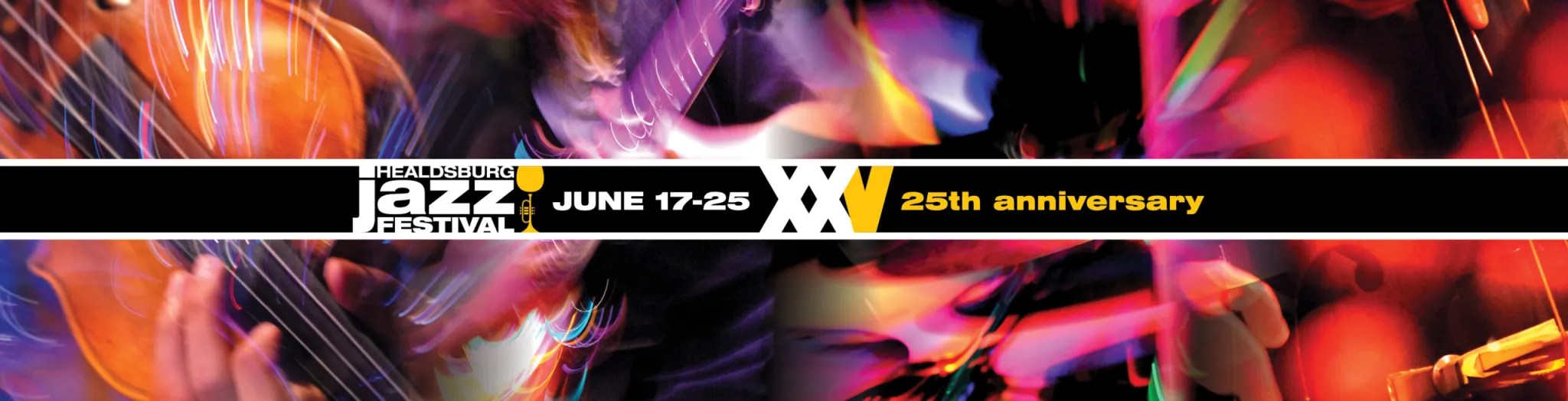
Healdsburg Jazz Festival kicks off its 25th Anniversary Season with Juneteenth. Enjoy free music and arts & crafts workshops!
Healdsburg Jazz is proud to present a diverse range of music, art, culture and education in honor of this holiday, free to the public in the Healdsburg Plaza. Our Juneteenth performances celebrate the wide range of Black music and art including gospel, early blues, New Orleans jazz, funk, R&B, spoken word, and straight ahead modern swing.
FREE JUNETEENTH Celebration in the Healdsburg Plaza with the Charles McPherson Quintet featuring Terell Stafford, Randy Porter, Akira Tana, and Marcus Shelby, vocalist Martin Luther The Real McCoy, The Robin Hodge Williams Gospel Choir, MJ’s Brass Boppers, Healdsburg Jazz Poet Laureate Enid Pickett and KCSM’s Greg Bridges.
Educational Activities – Families and young people are invited to join ArtsEd4All in the plaza to learn more about Juneteenth and check out the exhibit celebrating 25 years of Healdsburg Jazz Festival. Fold a zine, make a flag, pinwheel, fan or decorate your own musical shaker at the art table. This year, the public is also invited to join teaching artist Amelie Anna Hinman for music workshops at 2:30 pm-3:00 pm and 4:30 pm-5:00 pm to play and learn about the origins of a variety of percussion instruments.
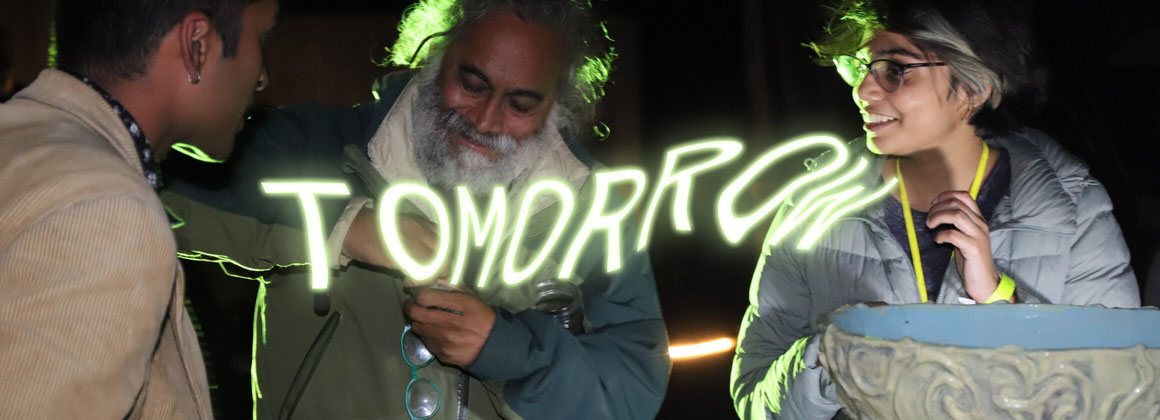
Imagining “TOMORROW” with DWeb Camp
The Internet Archiveis an American digital library with a mission to provide Universal Access to All Knowledge. DWeb is a global network of builders and dreamers working to create a better, decentralized web. The goal of DWeb Camp is to create a collaborative space for people to connect, learn, share, and have fun as we work towards building a better, decentralized web.
At camp, Del Sol Quartet and composer Erika Oba conducted an open workshop demonstrating the give-and-take process that goes into creating and performing a new musical composition. Erika’s composition, “Behold the Sea,” is inspired by a story of friendship between two artists, Bill Zacha & Japanese artist Toshi Yoshida which resulted in a sister city relationship between Mendocino, California (USA) and Miasa, Nagano (Japan). Continuing the tradition, Erika and the Del Sol Quartet are using music to highlight the importance of building friendships and networks of community in order to protect the water and environment to help build a better world.
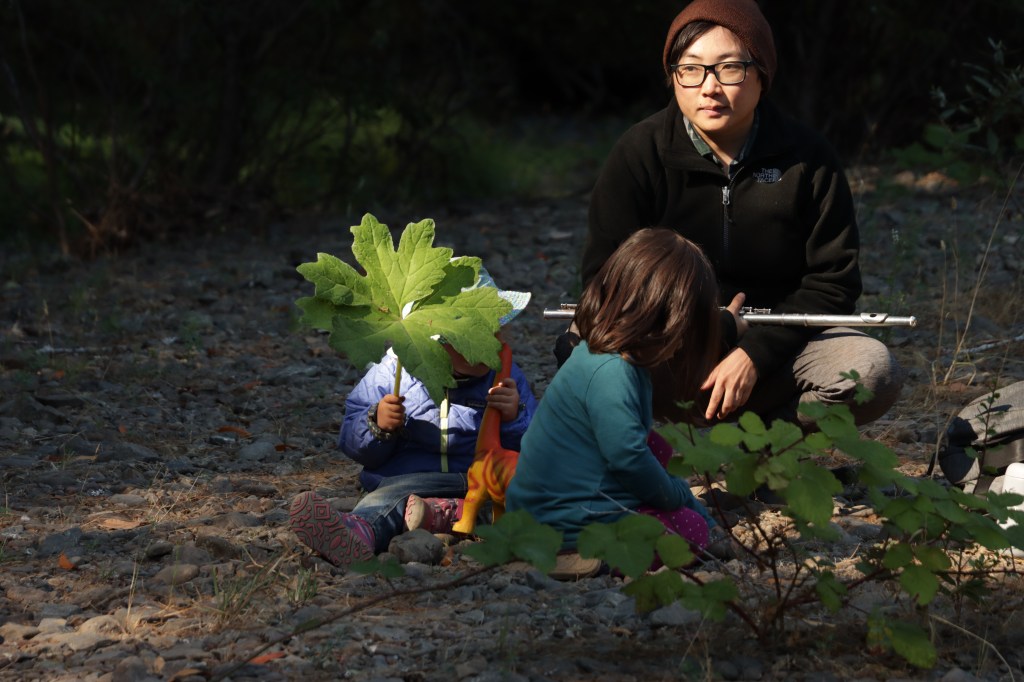
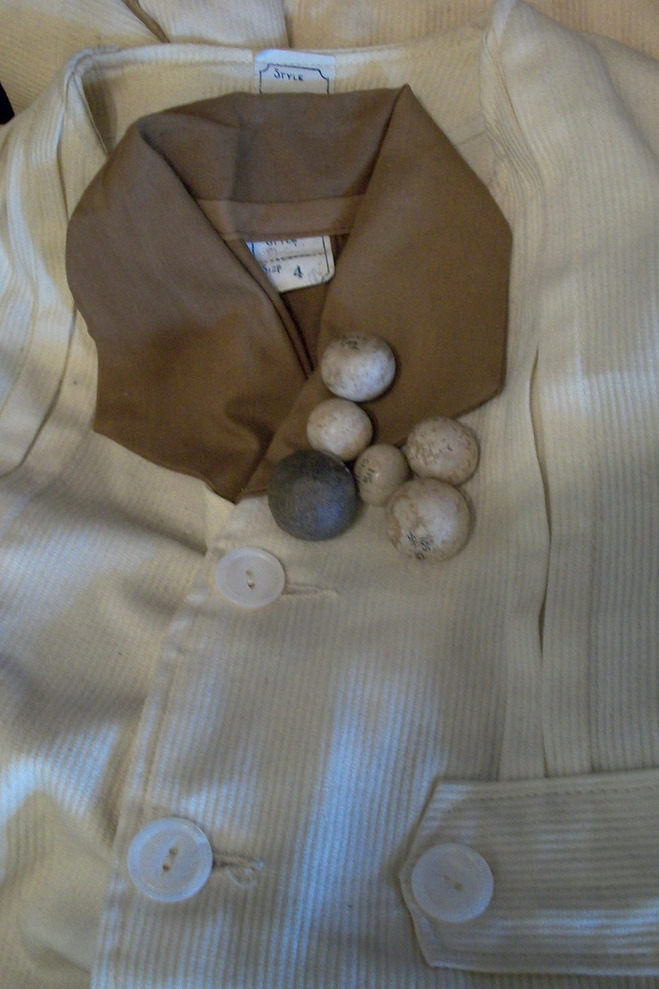
Composer Erika Oba invited DWeb campers to make music using stones in the dry bed of the Navarro River.
This plaque, dedicated in a community ceremony held on July 4th, 1982 reads, “The citizens of the sister cities of Mendocino, California and Miasa, Japan dedicate this plaque to the peaceful pursuits of the peoples of the Pacific Basin and to the protection of its environment that all living things there-in may exist in perpetual harmony.”
FREE on ZOOM – Thursday, JUNE 22, 12-1 pm PT | 3-4 pm ET.
This year at DWeb Camp, we’re tuning into the Plastic Pollution Coalition’s global webinar, Plastic-Free Seas: Diving Into How Plastic Impacts Health, Climate, and Our Oceans, on Thursday, June 22, 12-1 pm PT | 3-4 pm ET. On June 22, we will dive deep into the challenges that plastic pollution poses to our oceans and our bodies, how polluted waters disrupt the “Blue Mind” mental health benefits we gain from access to healthy oceans and waterways, and how we may restore our planet as well as our own physical and mental well-being.
DWeb Camp is using imaginative live action role play to dream of a better internet.
Build new networks and find your flow in Nature.
FREE – Saturday, JUNE 24 (or anytime, anywhere, as you please)
Technologists at DWeb Camp are hosting a LARP Worldbuilding session, using play to imagine how the Internet of Tomorrow might be transformed for the better. A LARP is a a live-action role-playing game in which a group of people enacts a fictional scenario (such as a fantasy adventure) in real time typically under the guidance of a facilitator or organizer.
Here are some ways to play along and join in the DWeb Camp experiment.
UNPLUG
– Take time out from the Internet and spend time recharging with a walk in nature. – Reflect upon your relationship with technology. Make a list of the ways that technology has changed your your life – for better and for worse. – What might be different? Are there aspects about your relationship with the Internet that you would like to change? “Think Different” was a slogan created for a 1997 ad campaignfor Apple.
– Design yourDWeb Alter Ego (with or without technology!)
“A Place for Poetry” with The Last Hoisan Poets
Anytime, in-person or virtual, FREE exploration of San Francisco public art
Take a poetry tour of the public spaces at the de Young Museum in San Francisco with The Last Hoisan Poets.
Write a poem with The Last Hoisan Poets.
Poets Genny Lim, Nellie Wong, and Flo Oy Wong — trace their roots to China’s Hoisan villages. They conduct special poetry readings in English and Hoisan-wa (a.k.a. the Toisanese/Taishanese Chinese dialect), to pay homage to their mother language which is at risk of fading from collective memory.
A Place for Poetry is a collection of poems by The Last Hoisan Poets inspired by the de Young Museum’s art and architecture. “One Eye” is a community poem begun by The Last Hoisan Poets, inspired by the sculpture of Ruth Asawa. The Last Hoisan Poets welcome poet of all ages and abilities to write a cinquain of their own. Listen toAsawa’s Gift to San Francisco, an audio tour sharing stories from the Asawa family. Take an ASL Tour of the Asawa sculpture installation the de Young Museum docent Jim Brune.
“When you put a seed in the ground, it doesn’t stop growing after eight hours. It keeps going every minute that it’s in the earth. We, too, need to keep growing every moment of every day that we are on this earth.” — Ruth Asawa
The book Your Brain on Art by Ivy Ross and Susan Magsamen shares that “neuroarts” is the transdisciplinary study of how the arts and aesthetic experiences measurably change the body, brain, and behavior and how this knowledge is translated into specific practices that advance health and wellbeing. The Aesthetic Mindset Index is based on a research instrument called the Aesthetic Responsiveness Assessment or AReA,developed by Ed Vessel, cognitive neuroscientist and his colleagues at the Max Planck Institute for Empirical Aesthetics in Frankfurt, Germany. The authors invite you to take the short survey, and then take it again in a month or two after you’ve had time to go out in the world and build your aesthetic mindset.
San Francisco is home to one of the largest and most diverse public art collections in the country. All city residents, workers and visitors have access to world-class art in everyday settings. Here are additional resources that will introduce you to some of the most engaging public art that San Francisco has to offer.
Join 400 cultural and civic institutions across the country for the third annual Civic Season, a new summer tradition for learning and action co-designed with Gen Z, the future inheritors of our democracy. Civic Seasonunites our oldest federal holiday with our newest, going beyond hot dogs and fireworks to invite meaningful reflection on our country’s past and our role in shaping its future.
On Sunday, December 12th, we were invited by Dr. Wallace J. Nichols to share how we put #bluemind into action with The 11th Annual Blue Mind [Deconstructed] Summit.
Blue Mind. Forever.
Our Blue Marble travels started here eleven years ago in 2010, and I never get tired of the spectacular view from McCovey Cove. However, it was a little strange to see the empty space where the statue of Willie McCovey should be. Stretch has stepped out of the batter’s box, waiting for construction to cease. As we lined up in the rain, a sail boat named City Lights swooped by. Raindrops dripped on our heads, but we eventually made our way inside for our holiday treat – hot cocoa and cookies with Lou Seal. In our ballpark by the water, in an atmospheric river, on an ordinary Sunday. In 2021.
The article that follows was replicated with a single click, thanks to a nifty tool created by our friends at COMPOST, a magazine about the digital commons. COMPOST is published to the web and DWeb using the Distributed Press API.
Margaret Warren and I greatly enjoyed our time working together to tell our story of “A Confluence of Waters” with The Blue Marbles Project for Issue 02 of COMPOST magazine, which you can find HERE, along with a specially curated Spotify playlist. (Begin with Blue Mind, and follow the Del Sol Quartet to Fast Blue Village 2). Happy Reading!
A Confluence of Waters
Exploring Connections with The Blue Marbles Project
Andi Wong and Margaret Warren
In the Summer of 2019, we—Andi Wong and Margaret Warren—met for the first time at one of the Friday lunches at the Internet Archive headquarters on Funston Street in San Francisco. We met while planning art activities for the Decentralized Web Camp, and it was there that Andi first shared a blue marble with Margaret. But that is not where this story begins, and it’s certainly not where it will end.
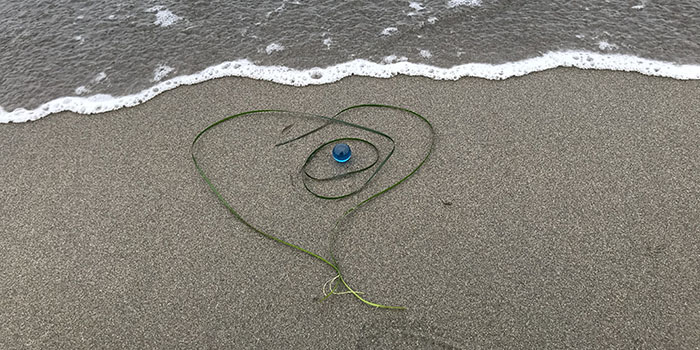
This story is non-linear and organically expanding. Like mushrooms in a Fairy Circle. Like when websites used to have web rings. Like BuckyBalls: nano particles of carbon atoms in a spherical structure. Like the new vision of the web: decentralized and linked through nodes and edges. A synchronistic murmuration of inspirations and enchantment.
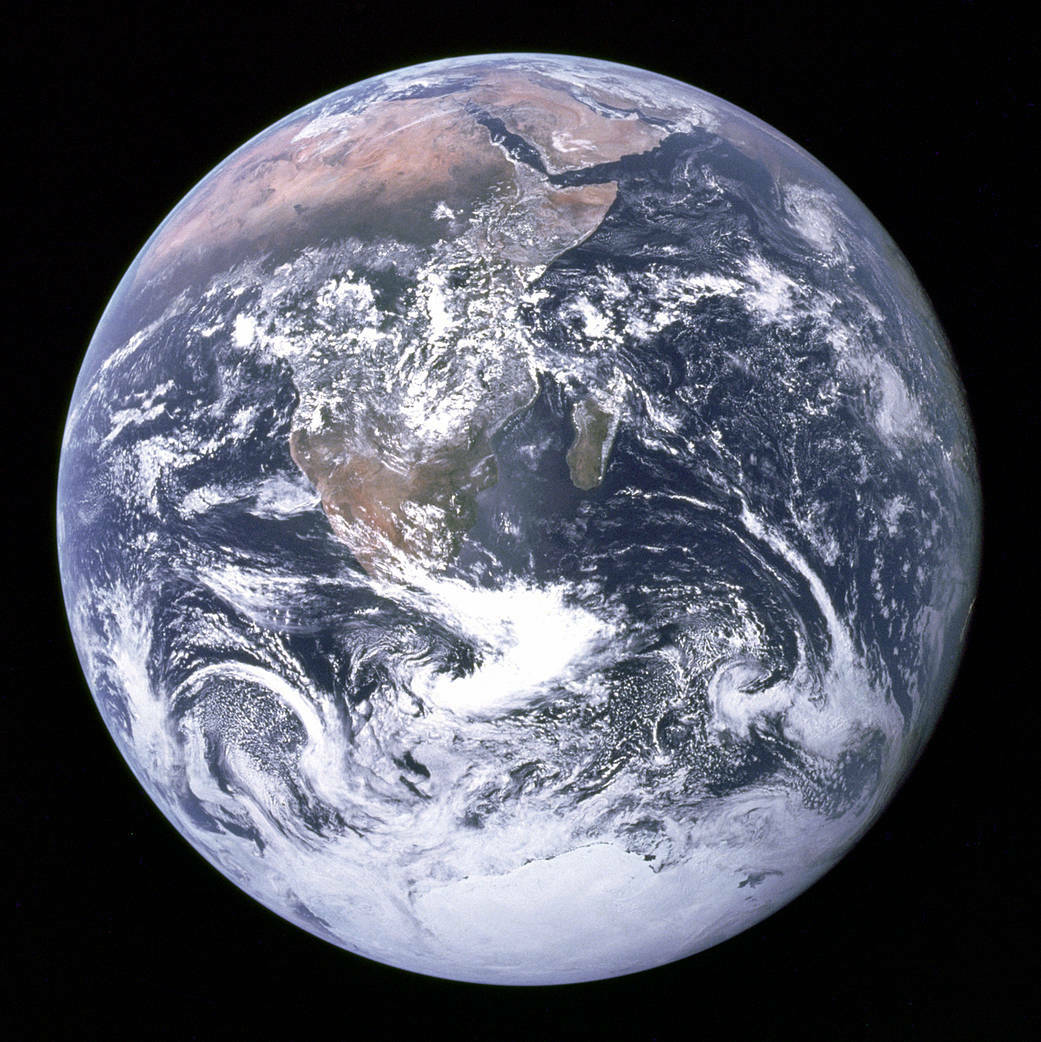
The ancient Greeks first declared the sphere the most perfect form and proclaimed it was the shape of the Earth and all the planets. Then on December 7, 1972, the crew of the Apollo 17 spacecraft made this vision evident when it produced this image of the earth, nicknamed “The Blue Marble,” on December 7, 1972.
Apollo 17: Blue Marble (Dec 7, 1972)
Creator: NASA
Copyright notice: 1972 NASA
Copyright terms: Public Domain Content
Apollo 17: Blue Marble (Dec 7, 1972)
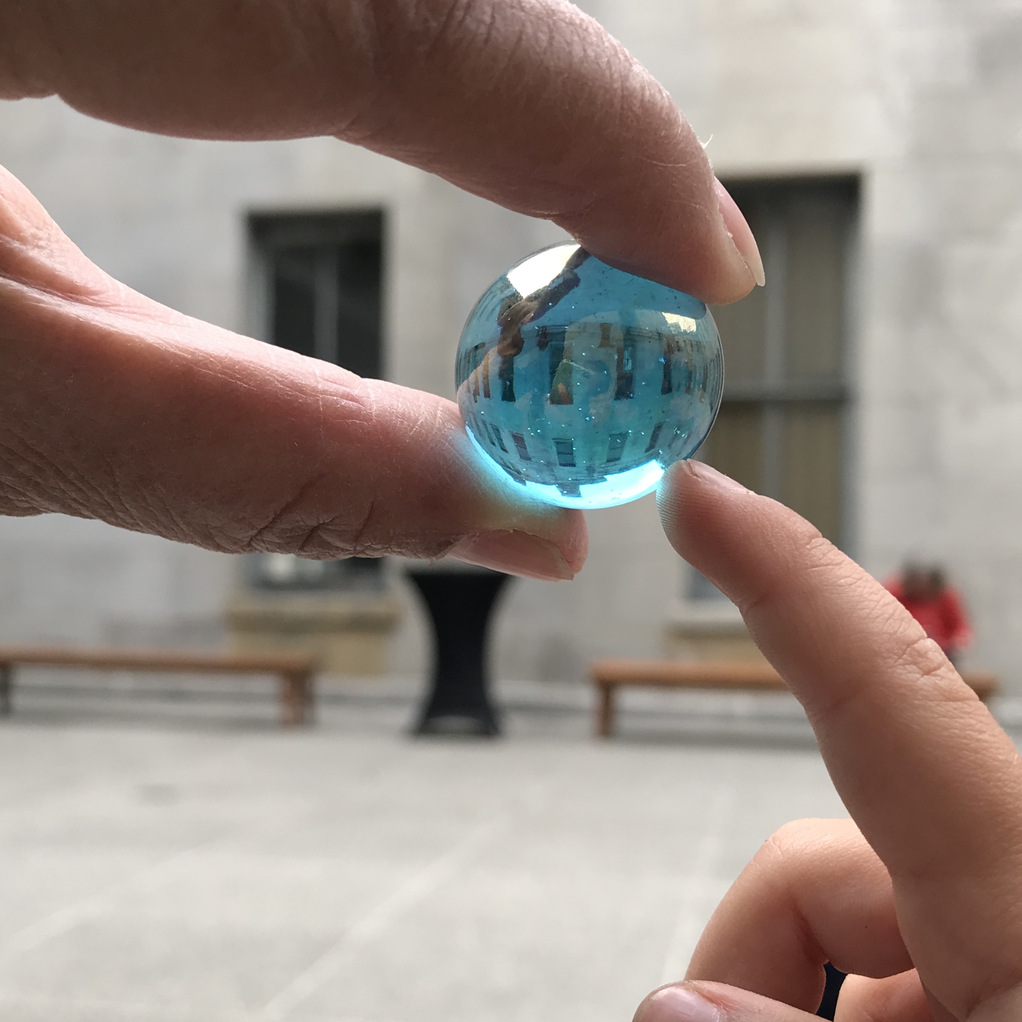
Creator: Andi Wong
Copyright notice: 2018 Andi Wong
Copyright terms: Attribution-NonCommercial-NoDerivs Creative Commons
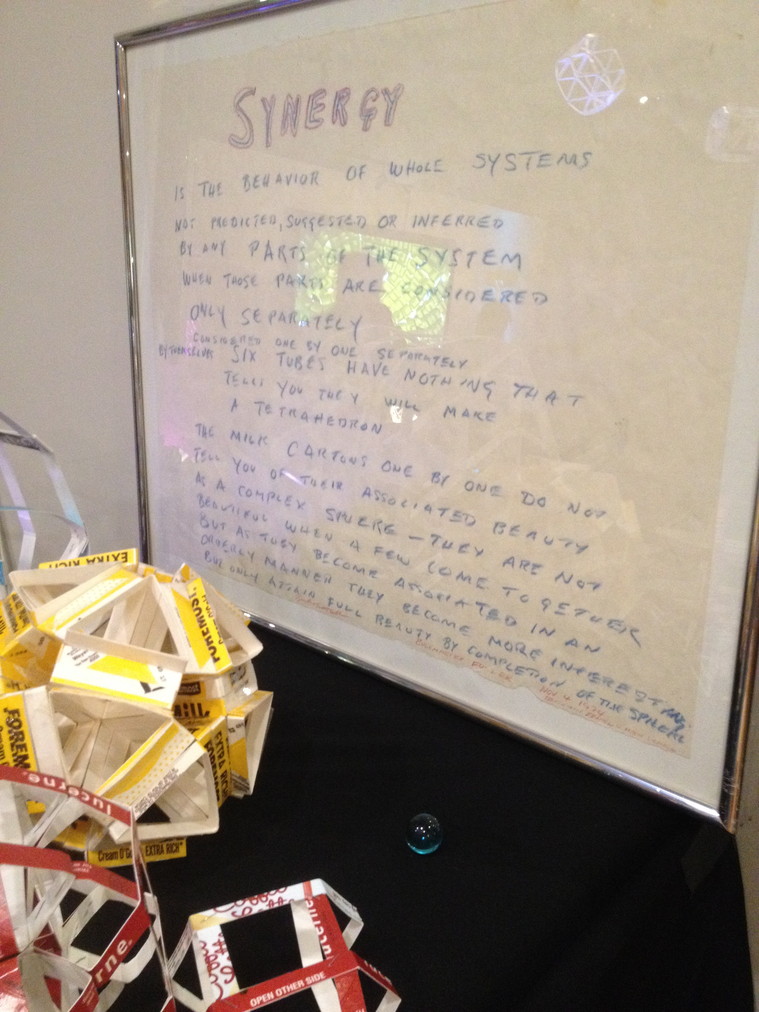
Blue Marbles Project: Synergy defined by Buckminster Fuller (2014)
Creator: Andi Wong
Copyright notice: 2014 Andi Wong
Copyright terms: Attribution-ShareAlike Creative Commons
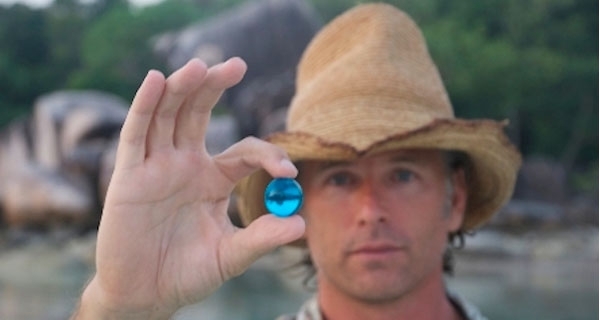
Now jump to 2009, when a marine biologist, Dr. Wallace J. Nichols, known simply as “J” had an ambitious idea to hand his friend LeBaron Myers a blue marble. That simple act became an idea, which then became a movement. A low-tech-slow-motion global art project with a seemingly staggering goal of passing a blue marble through the hands of every (yes, every) person on OUR blue marble Earth, and along with each passing—a simple message of gratitude and reminder that everything we do on our water planet matters.
Dr. Nichols holding a blue marble
Creator: Neil Ever Osborne
Dr. Nichols is an innovative and entrepreneurial scientist. In 1996, J placed a satellite-tag on an adult female loggerhead sea turtle that was released into the wild after being rescued in Baja, Mexico. Adelita, named after a local fisherman’s daughter, was the first animal tracked across the Pacific Ocean, traveling over 9,000 miles from Baja, Mexico to her place of birth in Sendai, Japan. Thanks to the internet, Adelita’s journey was followed by children everywhere.
Where is your water?
J often asks people the question: ‘Where is your water?’ to kick off a conversation. What is the special place where you find you go to the water’s edge? For some, it might be the neighborhood swimming pool. Others might answer that they go kayaking or sailing, or they think of a tropical island paradise where they go on vacation. Garden hoses, public fountains, an opened fire hydrant, or ocean surf… Really, there is no wrong answer.
Scientists and teachers spend a lot of time crafting thoughtful, open-ended questions when they want more than a simple “yes” or “no” answer.
In 2010, Andi went to hear J talk about sea turtles, after an introductory email exchange about water. She wrote to ask J about his view of the changing waters of the Gulf of Mexico, after seeing his CNN video report about the Deepwater Horizon oil spill online. [1] When J asked Andi this question, she really had to think before answering.
Andi’s Water
My water begins in a small town in the California Delta called Locke, a historic rural Chinese-American community in the United States. The town of Locke was built in 1915 by Chinese residents, after the Chinatown in nearby Walnut Grove was destroyed by fire. I enjoyed lazy childhood summers in Locke, staying with my grandparents in their home on Main Street. My cousins and I had the run of the wooden plank walkways and the back alleys of this tiny four-block town. Locke was a place where we could roam and play until sundown, and we children grew up with very little knowledge of the extreme challenges faced by our families: The Page Act of 1875, The Chinese Exclusion Act of 1882, The Geary Act of 1892, The Alien Law of 1913 which prohibited the Chinese from owning land. There, in this isolated town, my mother’s family made it through the Great Depression and World War II.
In the 1940’s and 50’s, most young people—including my mother—left Locke, searching for greater opportunity and better living conditions. Today, in 2021, few residents of Chinese ancestry remain, and Locke has one of 300 failing systems in California that routinely supply roughly 1 million people with contaminated drinking water.
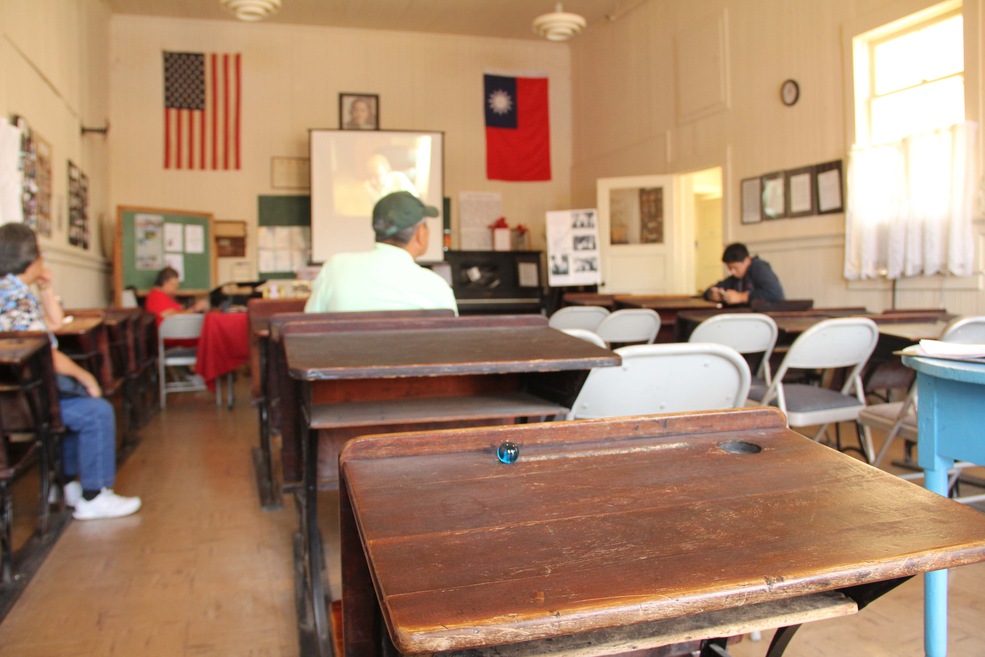
The Blue Marbles Project: Locke Chinese School (2015)
Creator: Andi Wong
Copyright notice: 2015 Andi Wong
Copyright terms: Attribution-NonCommercial-NoDerivs Creative Commons
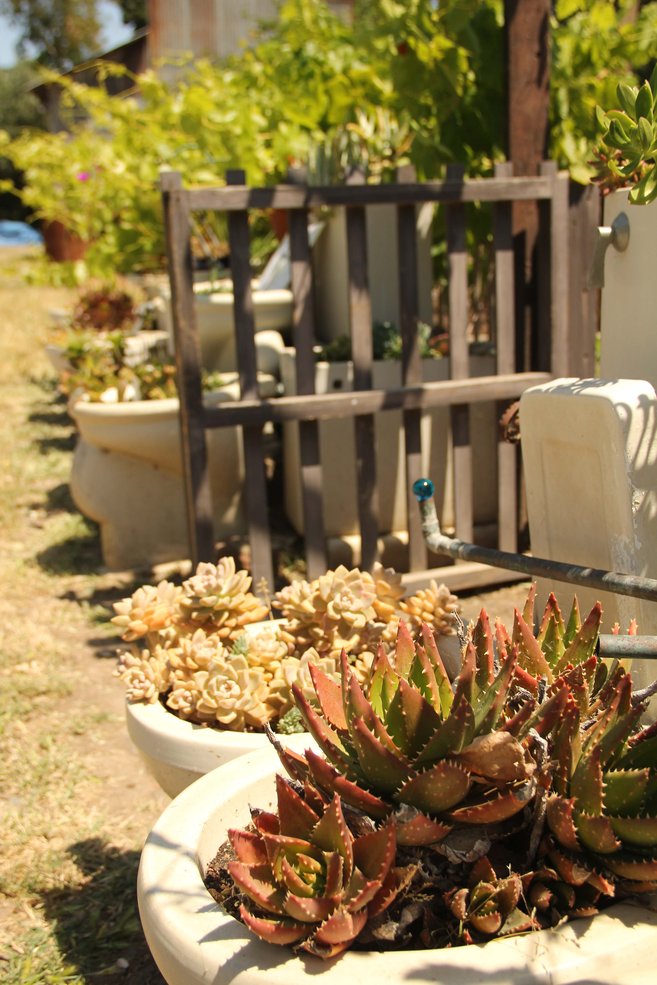
The Blue Marbles Project: Connie King’s Toilet Garden, Locke, CA (2015)
Creator: Andi Wong
Copyright notice: 2015 Andi Wong
Copyright terms: Attribution-NonCommercial-NoDerivs Creative Commons
The river flows past my hometown of Sacramento, where I went to school, worked and got married, before moving to San Francisco. There the Bay waters swirl around Angel Island, where my grandmother, five months pregnant, landed on September 13, 1929, accompanied by my grandfather after a 31-day ocean crossing on the Tenyo Maru. Ye Ye, my grandfather, was free to depart, having taken up residency in California in 1911, as the son of a merchant, but Yin Yin, my grandmother, was held on the island for processing. The Angel Island Immigration Station transcripts document hours of intense interrogation. These records also revealed that Ye Ye was manager at United Meat Market for 36 firm members, and perhaps the cooperative’s pooling of investments explains how he was able to post the $1000 bail for Yin Yin’s temporary release eight days later. As ordered by the court, my grandmother returned to Angel Island carrying proof of childbirth: her 3-month old son Edmund—my father—and she was officially admitted to the United States as the wife of a domiciled Chinese merchant on March 17, 1930.
The Blue Marbles Project: Angel Island (2012)
Creator: Andi Wong
Copyright notice: 2012 Andi Wong
Copyright terms: Attribution-NonCommercial-NoDerivs Creative Commons
Angel Island Suitcase: Clay Marbles (2011)
Creator: Andi Wong
Copyright notice: 2011 Andi Wong
Copyright terms: Attribution-NonCommercial-NoDerivs Creative Commons
My water continues beyond Angel Island, flowing past the Golden Gate Bridge to San Francisco, where my two now-grown children built sandcastles on Ocean Beach and learned “you never turn your back on the Ocean.” It is a long oceanic journey from the farmlands of the Pearl River Delta of Southern Guangdong Province to reach “Gum Saan,” meaning “Gold Mountain,” what the Chinese called San Francisco, California. Much like Adelita the sea turtle, my immigrant ancestors needed both fortitude and good fortune to cross the Pacific Ocean.
For the past twenty years, I’ve worked in San Francisco public schools, as a teaching artist—a phrase coined to describe “an active artist who chooses to also develop the skills of teaching in order to activate a variety of learning experiences that are catalyzed by artistic engagement.” When the COVID-19 pandemic shuttered both schools and theaters, I focused on supporting two groups that struggled to adapt to the pandemic, often with limited access and experiences with technology: artists and elders.
Now I’m serving as project manager, researcher/archivist, and community liaison for a project called “Angel Island Insight,” with the Del Sol String Quartet and The Last Hoisan Poets. My work with poets Genny Lim, Flo Oy Wong, and Nellie Wong, also descendents of Angel Island immigrants, has filled me with a richer understanding and gratitude for the survival instinct and wisdom exhibited by the Chinese American diaspora. These vibrant elders taught me “haw meong suey,” an expression that literally means “Good Life’s Water” in Hoisan-wa, the dialect spoken by early Chinese immigrants. [2] By writing new poems in Hoisan-wa, they are keeping the history and language of our ancestors alive and vibrant, in a time when intercultural understanding and cooperation are needed more than ever. Del Sol, unable to perform for audiences in concert venues, struggled with latency issues while streaming on Zoom. They pivoted to playing free outdoor pop-up concerts and commissioning composers to write new short musical works to inspire joy.
The history of the Chinese on Angel Island, America’s own immigration history, remains unknown to many. But when audiences board the ferry to Angel Island for performances by Del Sol in October, this artistic exploration of the history of immigration and exclusion will be presented with “haw meong suey,” a healing dose of ocean. For me, this was yet another surprising chapter in an epic voyage that began with the gift of a blue marble from Dr. Wallace J. Nichols at Gray Area Foundation for the Arts on July 29, 2010.
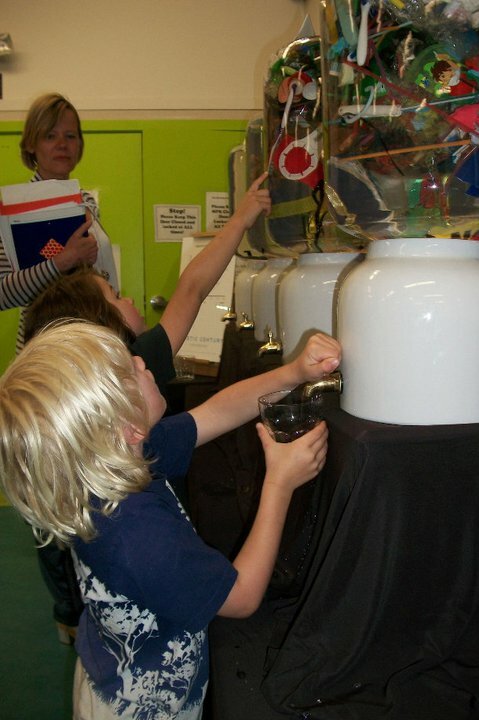
At that event, four large water coolers were lined up on a table, each filled with a colorful flotsam of plastic demonstrating the increasing levels of plastic pollution accumulating in our oceans from 1910, 1960, 2010, to 2030—an ominous depiction of the future, if no interventions were taken. Neat rows of stacked glass tumblers issued a silent dare to drink. Plastic Century was an experiential art installation created for World Oceans Day and the 100th anniversary of Jacques Cousteau’s birth. J and his project’s co-creators wished to convey the “feeling of strangeness, discovery, disgust, and delight… what we want to remain with people as they walk out into the great big plastic world.”
The Blue Marbles Project: Wallace J. Nichols (2010)
Creator: Andi Wong
Copyright notice: 2010 Andi Wong
Copyright terms: Attribution-NonCommercial-NoDerivs Creative Commons
Open House: Plastic Century (2010)
Creator: Andi Wong
Copyright notice: 2010 Andi Wong
Copyright terms: Attribution-NonCommercial-NoDerivs Creative Commons
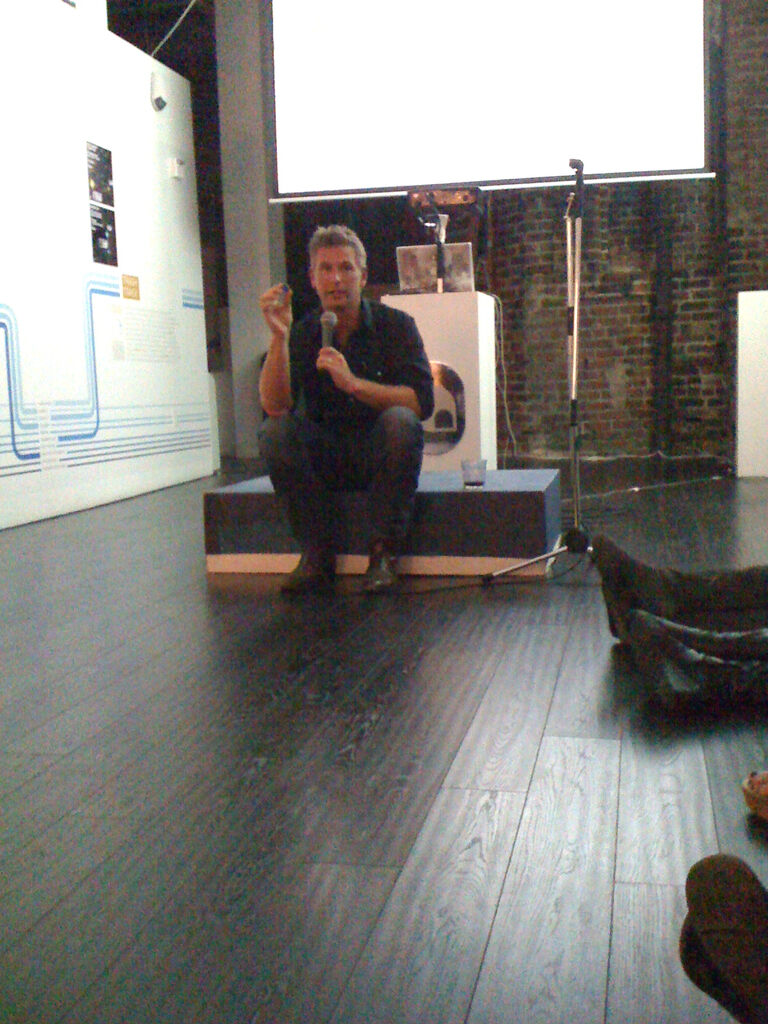
J was there to speak about his first-hand impressions of the Deep Water Horizon disaster, the largest marine oil spill in history. He had just returned from New Orleans after filming apocalyptic scenes of the ocean on fire from a helicopter. In Louisiana, he had walked on beaches littered with tar balls; filming and describing the details to his daughters. When I came across his report on CNN, I was sickened by his images of waters roiling in an oily sheen of sickly hues of yellows, reds, and white. “The Gulf,” he said, had become “the world’s largest petri dish.” with the unprecedented use of the chemical dispersant, COREXIT.
Noting that scientists are not often known for speaking about love, J spoke openly of his love for the ocean and his commitment to care for a world that his two daughters would grow to inherit. He discussed the value of using new tools and technologies to reach hearts and minds. Then, at the end of the evening, J gave each person in the room one blue marble. He explained the simple rules of the “blue game,” a ritual that has since become an integral part of my story, connecting me to thousands of others since that Summer in 2010.
Around the World with the Blue Marbles
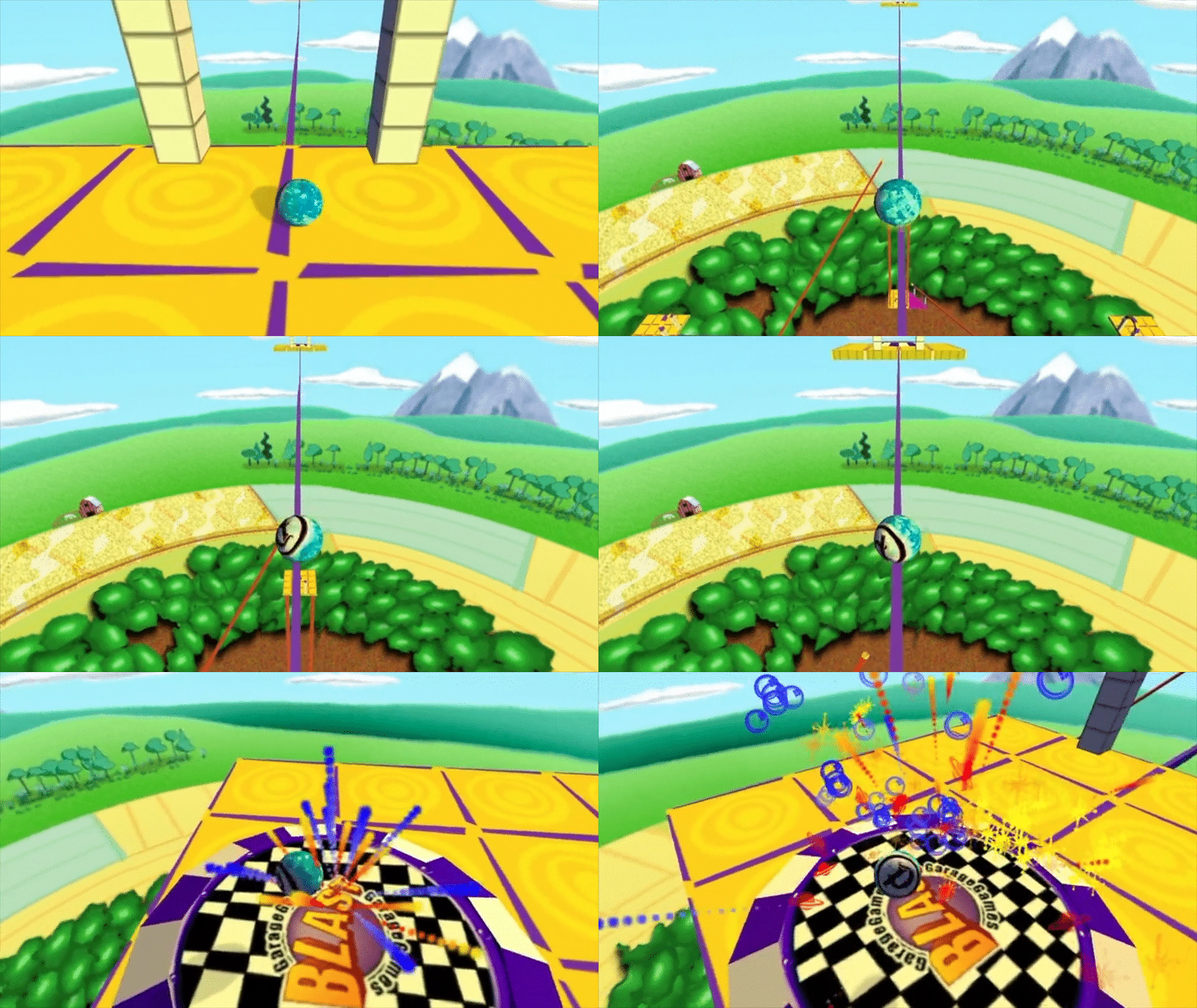
I had just taken a new position at school: working in the computer lab. Excited to find ways that the arts might be integrated with technology, I soon discovered that all the kids really wanted to do in the lab was play a computer game called Marble Blast, where players roll a small marble through a variety of obstacles courses, without falling “Out of Bounds.” If you made it to the end, you were rewarded with a big burst of fireworks.
Image via Andi Wong
When I asked the kids why they liked playing the game, I learned that they knew that if they kept playing the game, they would improve. And one boy told me that he liked this game because he knew he could never die in it.
It was then that I decided what I would do with my class. We would play Marble Blast, away from the keyboard, in real-life.
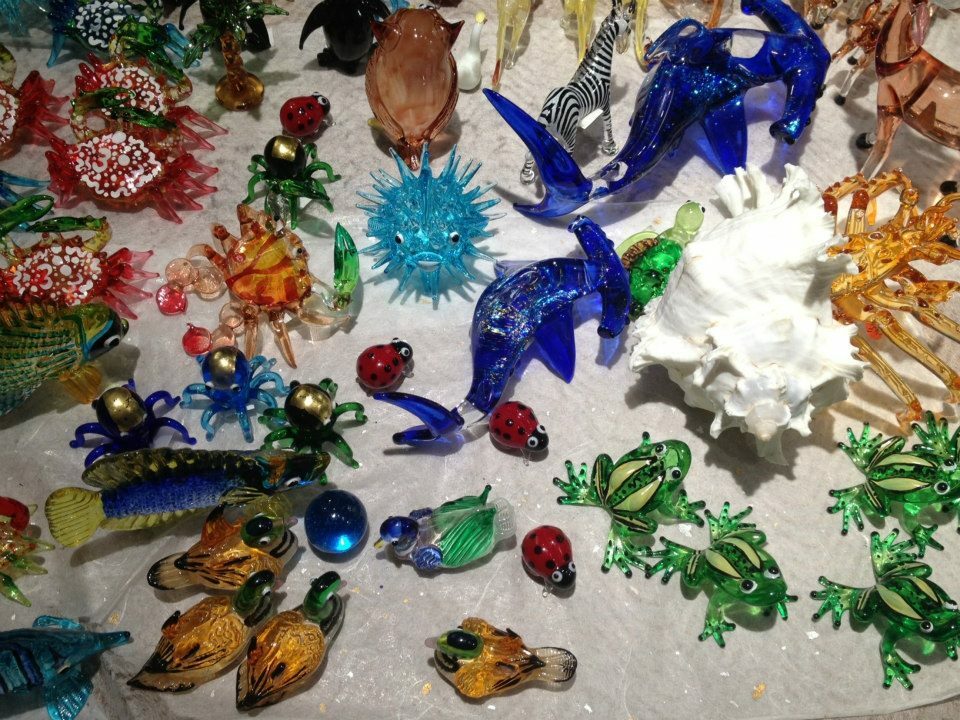
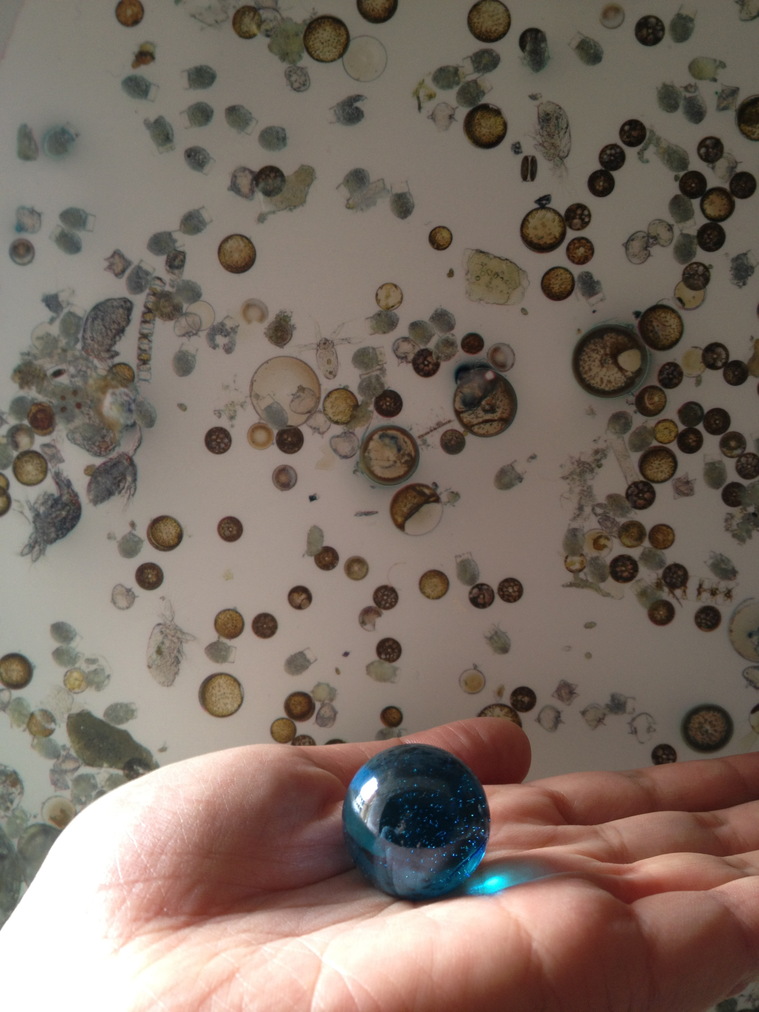
When very young children draw their blue marbles close to their eyes while looking into the light, they will tell you that they see a whole menagerie of creatures, both real and imaginary — dolphins and whales, sea turtles and fish, merpeople and pirate ships. The children are eager to share what they see, and their eyes shine bright with wonder.
The Blue Marbles Project: The Glass Menagerie (2013)
Creator: Andi Wong
Copyright notice: 2013 Andi Wong
Copyright terms: Attribution-NonCommercial-NoDerivs Creative Commons
When I asked the children if it might be possible to pass a blue marble through the hands of everyone on Earth, they answered enthusiastically, “Yes!” The follow up question, “Can you do it by yourself?” made it clear that we would need to ask others for help.
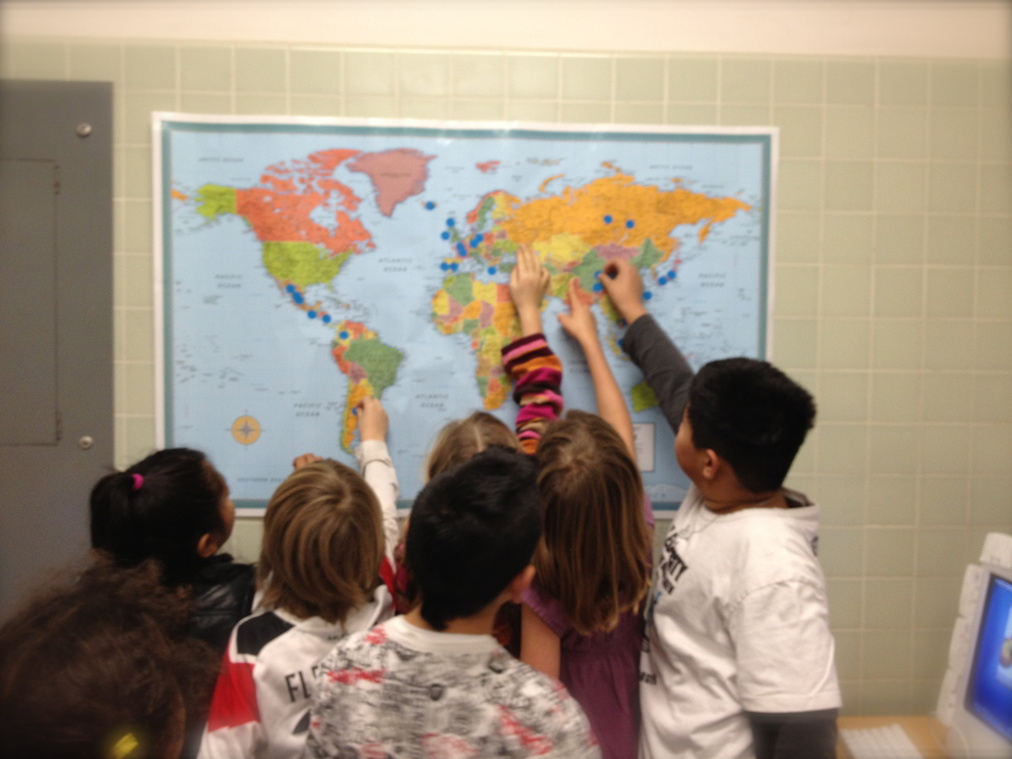
At first, we only had one blue marble to play with. I asked the class, if they could send the Blue Marble anywhere on Earth, where would they like to see the marble go? After much discussion, the children decided that they wanted to see the Blue Marble at The World Series. We had to figure out a way. Incredibly, within minutes, we discovered Mr. Rogers, a fourth grade teacher, would help.
The Blue Marbles Project: Mapping (2011)
Creator: Andi Wong
Copyright notice: 2011 Andi Wong
Copyright terms: Attribution-NonCommercial-NoDerivs Creative Commons
The next stop was Cuba, a place that was near impossible for most children to visit. The children’s imaginations caught fire. We bought a case of marbles and the game was on. Together, we traveled with Blue Marble to see the world beyond the United States. The Colosseum in Rome. The Berlin Wall. The Eiffel Tower. The Taj Mahal. The Great Wall of China! Family and friends helped the children to see the world by sharing their adventures through photographs and correspondence on Facebook.
It took three years, but the children finally achieved their goal to visit every continent on Earth, when a Blue Marble made it to Antarctica. Blue Marble followed the water, traveled across the Sahara Desert by camel, crossed the Alaskan frontier on the Iditarod, via gondola, rickshaw, airplane, and submarine.
Gif via Andi Wong
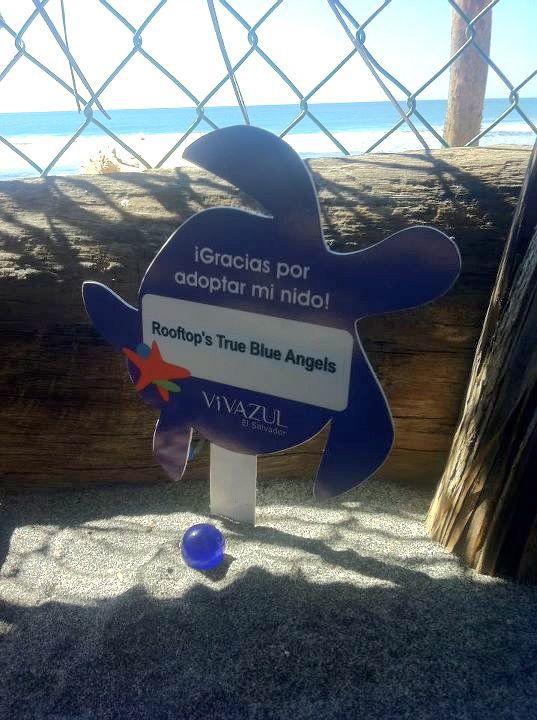
As the children learned about the Ocean and her importance to all life on Earth, they grew eager to apply their knowledge. They learned how to reduce, reuse, recycle, and ultimately refuse the plastic that soils their beaches by sewing their own cloth lunch bags. We sponsored a nest in the Yucatan Peninsula and celebrated the birth of sea turtle hatchlings. The third graders premiered Chelonia’s Story, an original opera about a young sea turtle and an ocean scientist who gently sings that captive turtles should be returned to the sea. On International Biodiversity Day 2016, the children used a new technology called Zoom, which was still relatively unknown then, to broadcast their sustainability fair celebration to a classmate in Saint Petersburg, Russia.
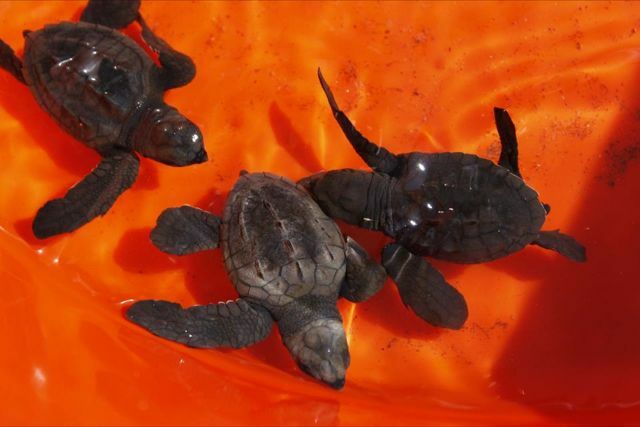
The Blue Marbles Project: Vivazul Sea Turtles (2012)
Creator: Enriqueta Ramirez
Three newly hatched sea turtles swim in glistening water in an orange tub.
Creator: Andi Wong
Copyright notice: 2012 Andi Wong
Copyright terms: Attribution-NonCommercial-NoDerivs Creative Commons
The project provided an opportunity for adults and children to learn together through play. When we made new connections between people and places, our planet felt a little smaller and nicer. There was a marble for everyone, so there was no worry about being left out. If a child lost a marble, we would ask what they might do differently and give them another to practice with. We all need to practice taking better care of our one Blue Marble. We are all in this together.
The Blue Marbles Project: One Cubic Foot (2012)
Creator: Andi Wong
Copyright notice: 2012 Andi Wong
Copyright terms: Attribution-NonCommercial-NoDerivs Creative Commons
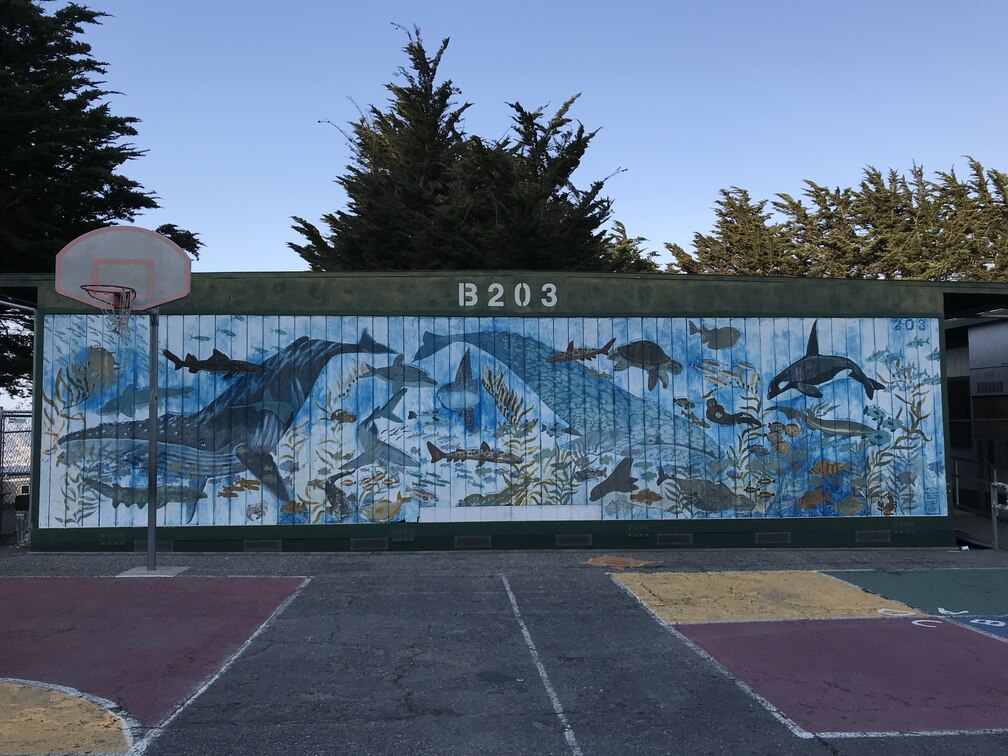
The Ocean Mural (2018)
Creator: Andi Wong
Copyright notice: 2018 Andi Wong
Copyright terms: Attribution-NonCommercial-NoDerivs Creative Commons
As time passed, the photo album of Blue Marble images grew, but with each school year, we also became more and more aware of the accelerating speed of environmental change. Would our photos eventually become a record of places transformed beyond recognition? Would the stories and information attached to the images be useful in the future? Social media platforms were being used to manipulate public opinion and spread disinformation, and I was looking for another way to work with my images. That’s when I met Margaret.
As if we were guided by two rivers headed towards a confluence, we met in 2019 when I was invited to support artistic projects at the first DWeb Camp at the Mushroom Farm.
This is when I first learned of Margaret and her project: ImageSnippets. It was then that I asked her the question: “Where is YOUR water?”
The Blue Marbles Project: Andi Wong (2014)
Creator: Young Wong
Copyright notice: 2014 Young Wong
Copyright terms: Attribution-NonCommercial-NoDerivs Creative Commons
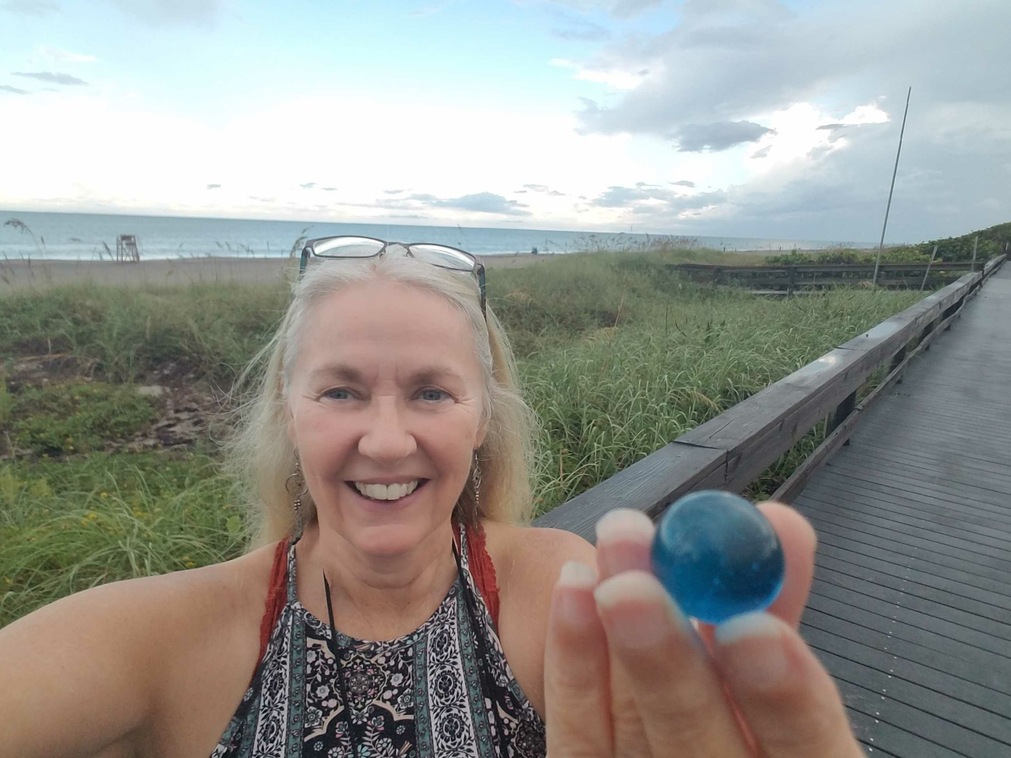
Margaret in Indiatlantic
Creator: Margaret Warren
Copyright notice: Margaret Warren
Copyright terms: Attribution-NonCommercial-NoDerivs Creative Commons
Margaret’s Water
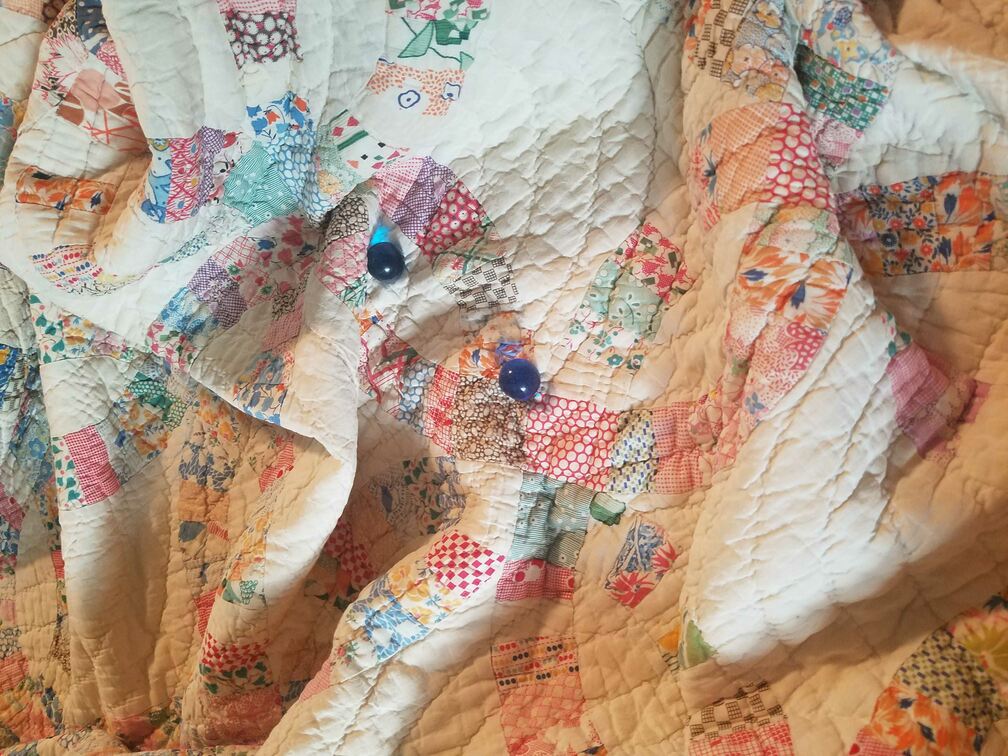
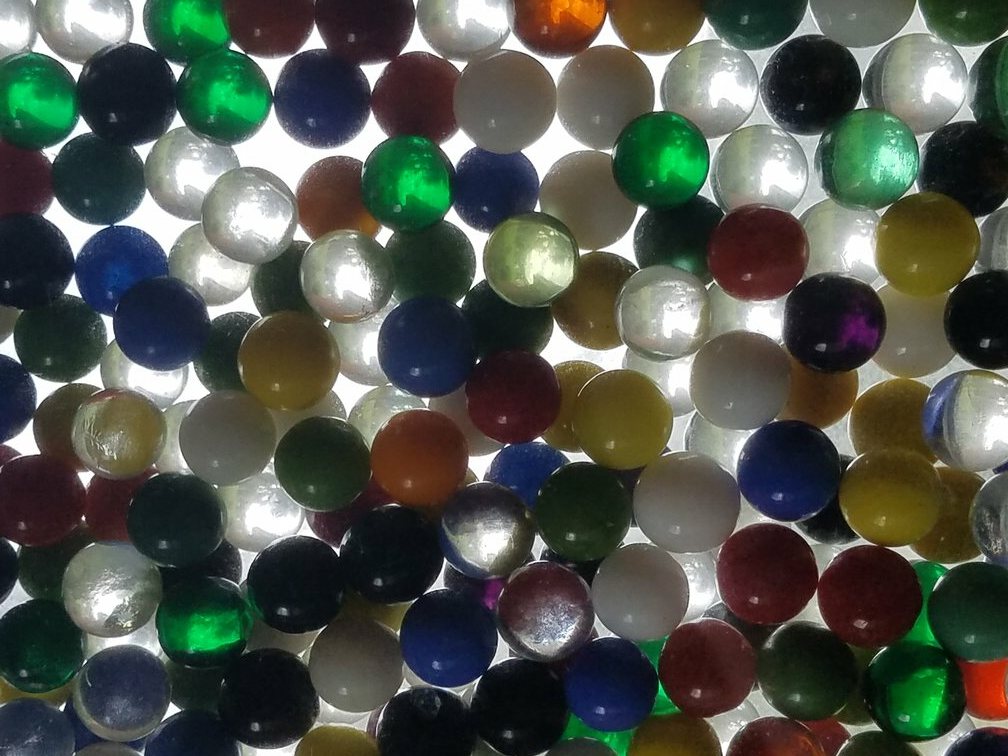
When I was a very little girl, my father would play marbles with me, but not in the traditional way with shooters and circles. Instead, we would take a big thick quilt, spread it out in a haphazard way and give it hills and valleys. Then we would take the marbles and move them around the quilted landscape. Maybe to my dad they were like little ‘troops,’ but I wanted to organize and study them. I grouped them by colors and types; categorized and counted. Later on, when our family would go flea market shopping, I so loved the marbles, it gave me my own little thing to seek out and collect while my parents collected cameras or other gadgets they were passionate about.
Blue Marbles on a Quilt
Creator: Margaret Warren
Copyright notice: Margaret Warren
Copyright terms: Attribution-NonCommercial-NoDerivs Creative Commons
Marbles
Creator: Margaret Warren
Copyright notice: Margaret Warren (2020)
Copyright terms: Attribution-NonCommercial-NoDerivs Creative Commons
Over the years, I have created many projects and professions, but most often I say I am an artist, a creator, a researcher, and a technologist—even though I feel like these labels keep overlapping and meandering. Looking back, I can now see I’ve spent most of my life responding to an inner curiosity for things like making art and photographs, describing images, discovering synchronicities, and building networks of people and machinery. Rolling and tumbling from one eddy to another, my life itself has felt both fluid and yet also deliberately and persistently guided by a much deeper current.
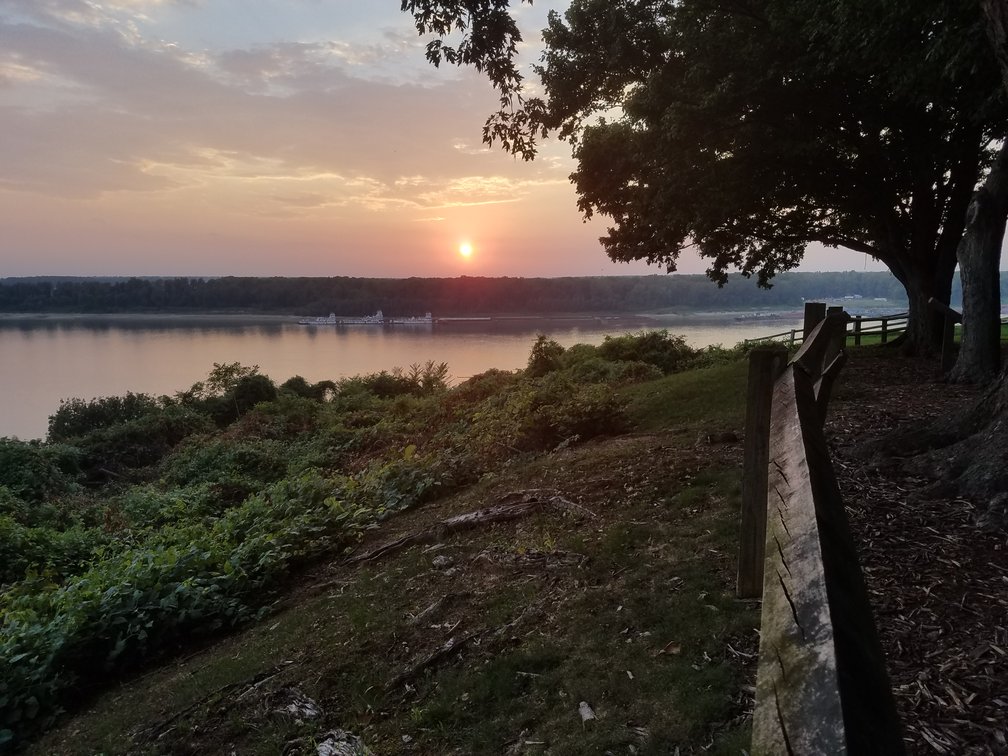
My water begins in the very far western tip of Kentucky, where I was born within ten miles of the Mississippi River. I was born in the county seat in a little town called Clinton, not far from an even smaller town called Columbus, which sits on a bluff overlooking the river. In the 1800’s, Columbus was much larger; a busy port for trains, barges, steamboats and all kind of river traffic on North-South trade routes. From Chicago, Illinois to Mobile, Alabama to New Orleans, Louisiana, ferries moved travelers across the nearly mile-wide Mississippi as they journeyed westward seeking fame, fortune, and new opportunities.
Some of my ancestors started out to be some of those westward seekers, but they just didn’t make it past the river. In fact, one story told in my family is that they decided to settle in Kentucky because one of my great-great-great grandmothers had taken one look at the river and said, “I’m not crossing that! [3]
…and yet it moves..
Creator: Margaret Warren
Copyright notice: Margaret Warren (2017)
Copyright terms: Attribution-NonCommercial-NoDerivs Creative Commons
As a young child, my story continued south to the Gulf of Mexico when my parents moved to Northwest Florida, to an area called the Big Bend.
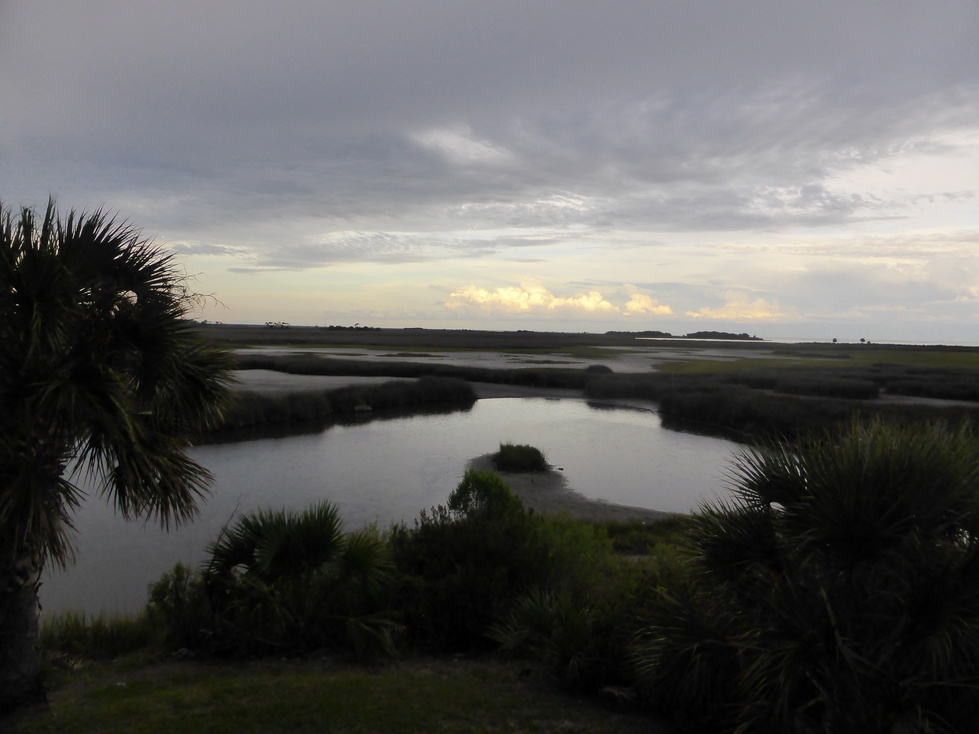
The waters of this part of Florida are quite special. This area is home to both the largest diveable underwater cave formation in the world (Wakulla Springs) and also to one of the oldest National wildlife refuges in the United States. Established in 1931, the coastal area of St. Mark’s was founded as a protection for migratory birds. The wetlands and estuaries of this area are also referred to as the ‘Forgotten Coast’ or ‘the Other Florida,’ because this area is so different from the white sandy beaches, palm trees, and condos that most people think of when they think of the state. The refuge protects longleaf pine savannas and coastal marshes as far as the eye can see. Made up of salt waters from the gulf and freshwater from nearby springs and rivers, this ecoregion is known as the southern coastal plain and is home to an amazing array of flora and fauna.
St. Marks
Creator: Margaret Warren
Copyright notice: Margaret Warren (2014-2021)
Copyright terms: Attribution-NonCommercial-NoDerivs Creative Commons
Unlike the fishermen and other inhabitants of these coastal towns, my parents were young artists interested in astronomy, nature, and wildlife. We regularly went canoeing and hiking in the area. Through my father’s work as a photojournalist, we circulated around the coast learning about the people and the environment. My father would often pull me out of school to bring me along on his feature photography days to take photos of places like St. Mark’s for the Tallahassee Democrat, the local newspaper.
As a teenager, my waters moved me in a new way, into a tour of duty in the US Coast Guard.
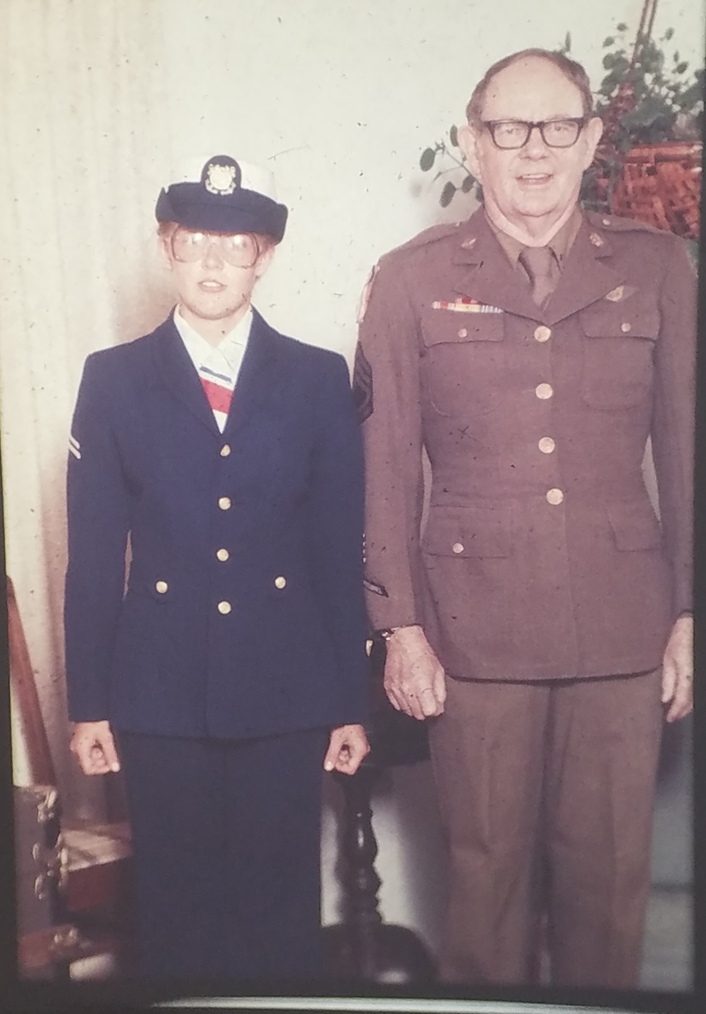
When I was part of the Coast Guard, I always felt so proud to be part of a mission for search and rescue, tending to buoys, and coordinating environmental cleanup in all of the waters of the US. Though I served only one term in the Coast Guard as a Cryptographic Electronics Technician, I did travel to the Great Lakes, the New York City Harbor, the SF Bay Area in California, Kodiak, Alaska, and then back again to the Mississippi River in New Orleans.
Electronics study in the Coast Guard led to computer science in college, and then various jobs that circulated around photography, technology, music and the arts and from the Gulf Coast to California and back again multiple times. Following my curiosity over the years, I was inspired to explore a unique problem: how to describe images with more formalized, machine-readable techniques.
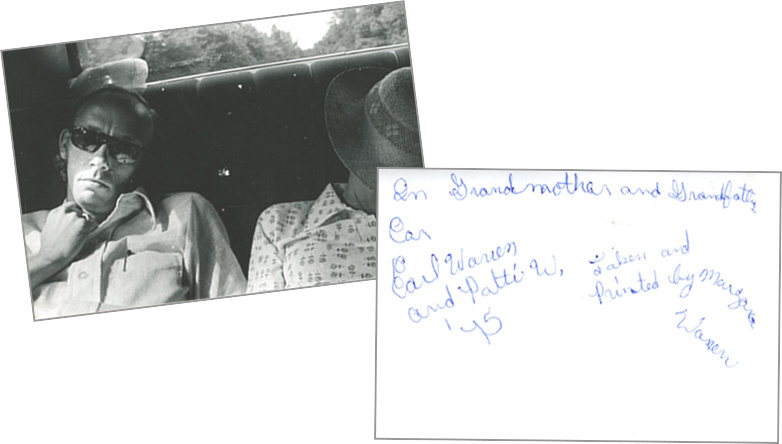
Being raised by artists, naturalists and photographers had undoubtedly inspired me; but I had also been the seven year old making encyclopedias of bird pictures matched to their scientific names. I made all of my school writing projects about images. When I would print my own photographs in the darkroom with my father, I always made sure I had written all of the ‘metadata’ (the who, what, why, where, how, when) on the back of the print:
Creator: Margaret Warren
Copyright notice: Margaret Warren (2020)
Copyright terms: Attribution-NonCommercial-NoDerivs Creative Commons
A Pair
Creator: Margaret Warren
Copyright notice: Margaret Warren (2020)
Copyright terms: Attribution-NonCommercial-NoDerivs Creative Commons
As my technology career evolved with the web, I strived to find the best ways to publish my images online with their metadata. But to my dismay, the web was actually evolving in such a way as to de-value publishing and curation methods that would have handled image metadata more appropriately.
In fact, to this day, many content producers continue to exercise poor metadata habits with images, and these habits—whether learned or ignored—have actually led to much more severe problems as a result. The serious problems associated with misinformation and disinformation on the web are now widely recognized and widespread. In particular, images stripped of their original metadata have been re-contextualized to manipulate emotion and used to polarize viewpoints.
Yet it can be challenging to write metadata. Many people just don’t want to write it, as they often don’t want to take the time to add context and intention to images, and don’t think about what will happen to the metadata once an image gets on the web. The technology behind centralized social media photo sharing has deliberately made it difficult to keep metadata attached to images, while at the same time retaining your image collections to keep you further tied to a platform.
We are still a very long way from mastering what it would mean to be able to formally record the context around the making of an image, as well as the intention with which that image is being shared. Though computer vision can produce some interesting demonstrations of image classification, language is very ambiguous and subjective, and artificial intelligence is a long way off from capturing the subtleties of image metadata.
In general, it can be said that sharing images properly on the web requires a human-centered thoughtfulness—a theory not embraced by advertising revenues.
ImageSnippets
Thus I started building ImageSnippets. ImageSnippets is a web based system that has now been in development for over 11 years with ideas stretching back almost 20.
I call ImageSnippets a metadata management system, but it’s designed to be so much more. It can be used to curate image collections, and be an interface for images to be linked in interoperable ways to other data on the web using linked data. It’s also being used as part of research projects for modeling formalized image descriptions, with descriptions by subject matter experts. All of this can be done in such a way that the descriptions can be machine-readable, and thus assembled into image-based knowledge graphs—also known as image graphs—in the process. In this way, ImageSnippets is also a research tool for knowledge representation.
Instead of requiring images to be held in centralized data stores, the tool is designed to sit as a layer over the images. That means the data can be held anywhere on any server, and the data is openly available and queryable using the SPARQL query language.
At the 2019 DWeb Camp, I worked as a volunteer to build out the local mesh network, as well as to design a collaborative art project. When I met Andi through this work and showed ImageSnippets to her, she immediately embraced the vision of ImageSnippets. Extending the idea of network nodes to the blue marbles, we both excitedly saw how it could be used to connect the stories of the photographs collected between all those people she and her students gifted with blue marbles.
The Blue Marble Game goes to ImageSnippets
Creator: Margaret Warren
Copyright notice: Margaret Warren (2019)
Copyright terms: Attribution-NonCommercial-NoDerivs Creative Commons
Publishing these images here on COMPOST with Distributed Press, we are fortunate to see this experiment come alive. But we are just at the beginning of this next phase of our story. This article represents a next step in taking image and metadata publishing techniques to decentralized protocols.
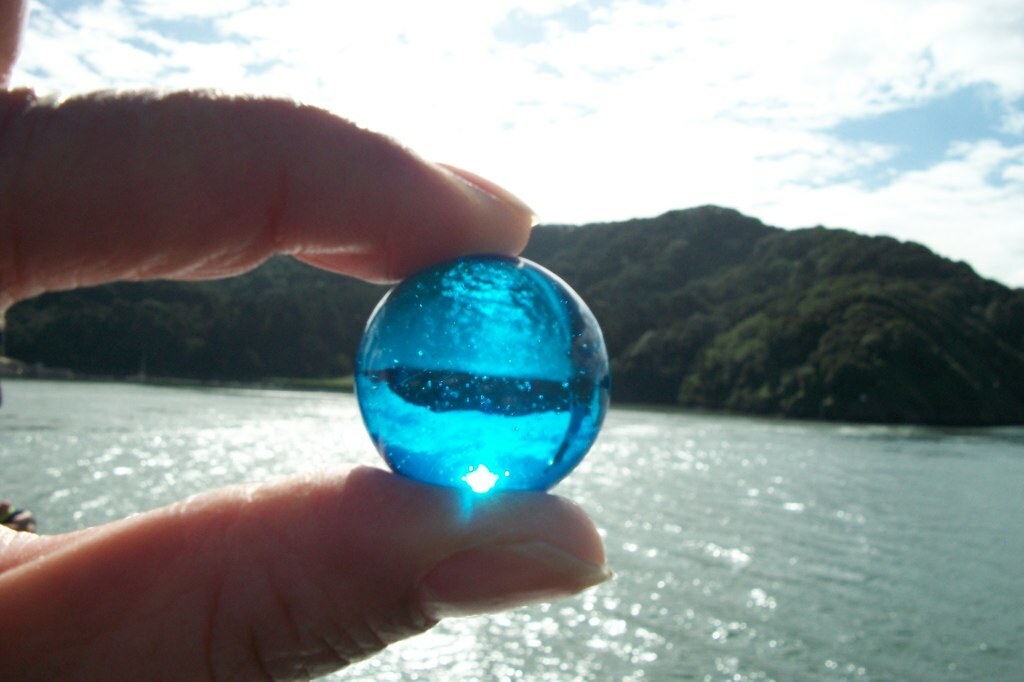
Computer scientist Admiral Grace Hopper said, “If you do something once, people will call it an accident. If you do it twice, they call it a coincidence. But do it a third time and you’ve just proven a natural law!” When a blue marble is passed it is a gift of gratitude for the good work that you do. When we share our gratitude in this way, we are building understanding, empathy, and love in our interconnected world. The blue marble opens up pathways through which we can learn and understand one another through a shared connection with our waters.
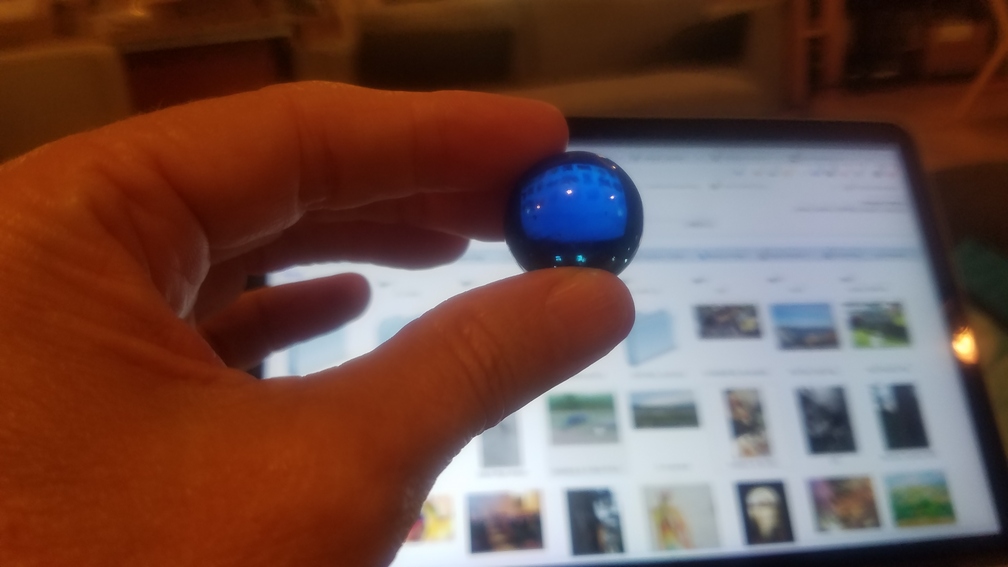
Image via Andi Wong and Margaret Warren
The images in this piece flip to reveal their metadata and the images themselves also contain the embedded metadata. This functionality is provided by ImageSnippets, a project by Margaret Warren. Image metadata allows others to understand the context and provenance of images when they are shared and published.
The authors wish to thank COMPOST for helping us to find confluence through our parallel exploration of the wild, domestic, and virtual waters that have shaped us as individuals. Andi & Margaret will continue to reveal, preserve, and share digital stories with The Blue Marbles Project, joining The Blue Mind Network’s global efforts to put #bluemind science into action to create common knowledge and practice.
If you would like to join their project, please visit bluemarble.pics to float a note to Andi at ArtsEd4All and dive into metadata with Margaret at ImageSnippets.
In celebration of World Kindness Day, we would like to share some holiday gift ideas, inspired by our ArtsEd4All family.
Our post-screening community conversation on October 24th inspired us to offer another dose of THE ANTIDOTE. This time, we are sharing some new stories and Simple Gifts from our ArtsEd4All family. It is our hope that the film will inspire others to put their own creative ideas into action, or even better – offer your support to someone else who can use a helping hand. Start small and put your whole hands, heart and mind into whatever you choose to do. Thanks for joining us. We wish you love, kindness and creativity this holiday season!
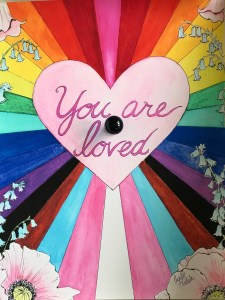
#1: SHARING LOVE, ART & KINDNESS — “YOU ARE LOVED”
It’s always special to receive a surprise package in the mail. Andi’s day was brightened when she opened the box to find a beautifully radiant painting, “You Are Loved,” from artist Crystal Vielula inside. Crystal’s thoughtful gift of art is especially special and precious to Andi because of the special story behind the painting. If you would enjoy supporting an artist’s campaign of kindness, Crystal is holding a “YOU ARE LOVED” print sale. 100% of the profits will be donated to Black and Queer Groceries, a mutual aid organization that is delivering groceries to black and queer people in need in the Bay Area. Visit Crystal’s website for more info: https://www.crystalvielula.com/you-are-loved-print-pre-sale.html.
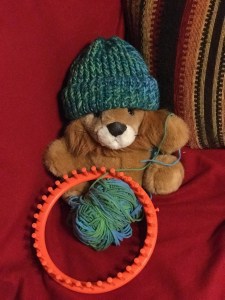
#2: KNIT TOGETHER — HELP STANDING ROCK STAY WARM IN WINTER
Winter has arrived, and the weather is turning cold. So when Gail shared that the Auntie Sewing Squad was organizing a Warm Coat and Extreme Cold Gear Drive for Standing Rock and Black Hills, we visited their website to see how to help. ArtsEd4All enjoys a great knitting project, so pull out your circular looms, it’s time to make some woolen beanies! Join the Aunties and help protect our friends at Standing Rock and those living on ancestral homeland in the Black Hills who are facing below zero temperatures this winter. When you are ready to send your items, check the Auntie Sewing Squad website for mailing addresses and visit Native-Land.ca, a website dedicated to helping people across the world learn more about their local Indigenous history. DIY TUTORIAL: How to loom knit a hat (super easy for beginners) https://youtu.be/BonWux0A2yM
#3: REMEMBER TO LOOK UP — WALKING “UNDER ONE SKY”
A trio of friends – Flo, Andi and Mara – first began walking together “Under One Sky” back in July with The 2020 Global Slow Marathon, a global art project launched in Scotland with artist Iman Tajik asking the question, “What is Solidarity?” The Slow Marathon is done, but The Skywalker FAM is still walking, lifting eyes and cameras to the skies with gratitude for each beautiful day of blue. Like the shape-shifting clouds that we observe daily, The Skywalker FAM collective photo album is ever-changing. Some days, a photo appears with a poem or a song, and we always welcome new members into the family. Please send your sky pics to sfgreenandblue@gmail.com.
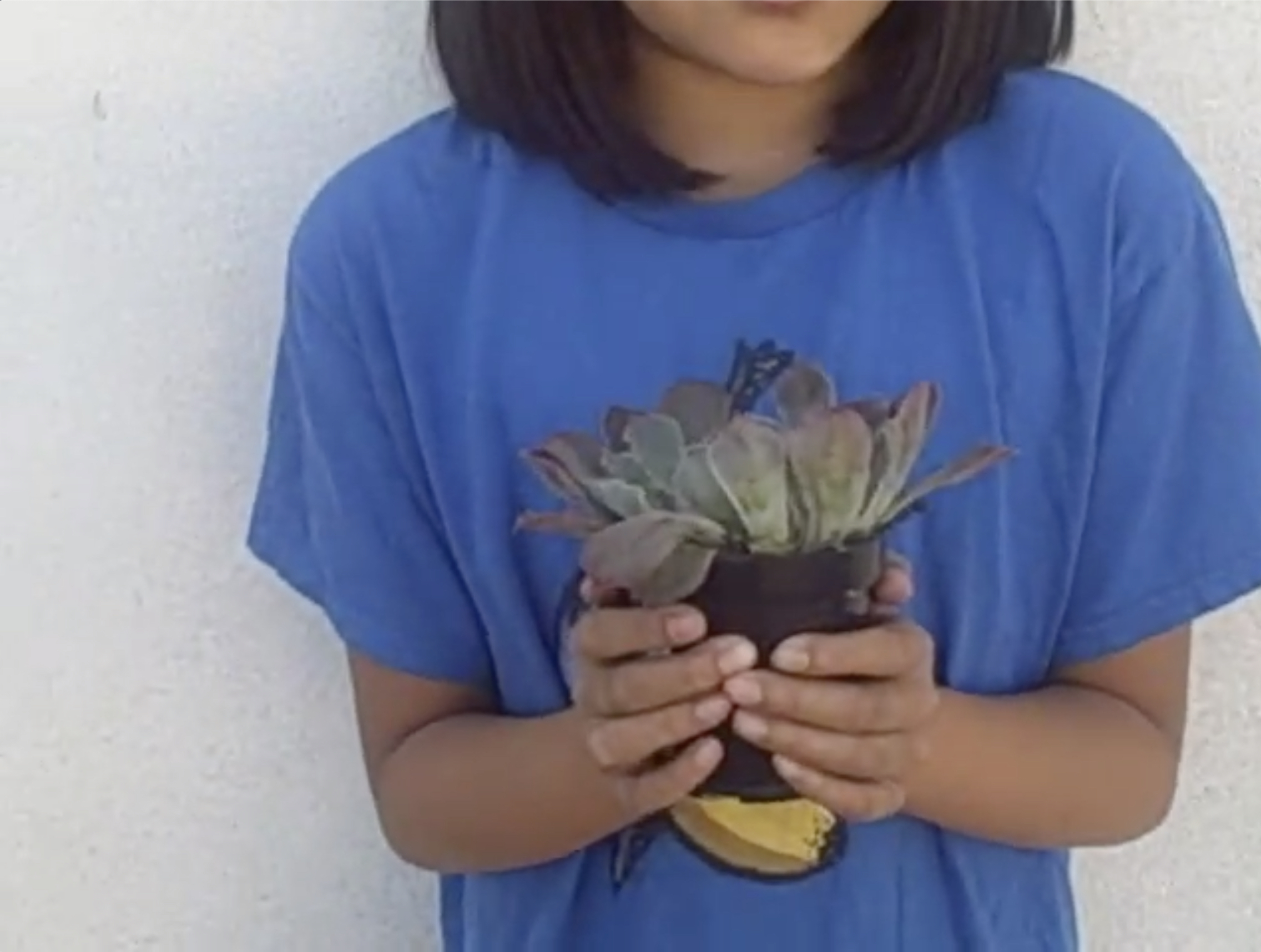
#4: GO GREEN — “SUCCULENT CITY”
Make your garden grow! One of the most beautiful visions realized during our time at The Studio at Mayeda was giving children a bit of Earth to call their own. With resourcefulness and care, the students were able to establish a small container garden of fruits & vegetables and succulents on the school’s rooftop. Have you ever saved and sprouted the seeds from your apple at lunch? Or tried to propagate succulents from a leaf or a cutting? Growing something of your own easy and fun. With some added research into the native plants in your area, you will get to know your neighbors – the birds, bees, butterflies – as Norma did when she helped to create a pollinator garden for PAWS (Pets Art Wonderful Support). Who knows, as your garden grows, you might even make a new friend who love trees as much as you do!
#5: FEED A NEED — BAKE SOME DOUGH
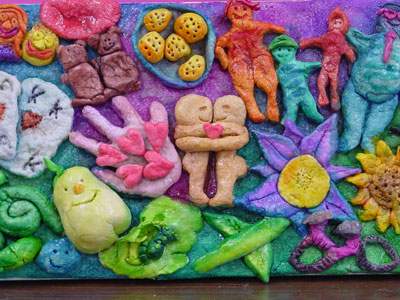
Whether you are making dough for bread or for art, there are so many wonderful ways to get creative with just a little flour, salt and water, and it’s easy to make a little bit extra to share. Our friends Joanie & Markknow that a good bake can go a long way. While Mark has been treating listeners to readings from Roshi, his new book of poems inspired by San Francisco, Joanie has been making her own kind of music in the kitchen, Their lucky friends have enjoyed the gift of her tasty zucchini loaf, garlic onion foccaccia and a festive holiday assortment of #PoetryAndCookies. Over the years, ArtsEd4All has kept Ruth Asawa’s bakers clay recipe handy, making loads of dough for holiday keepsakes and collaborative art pieces with generations of school children. Resourceful makers in San Francisco go to the Scroungers Center for Re-Usable Art Partsaka SCRAP, the non-profit creative reuse center founded in 1976 by Ruth Asawa & Anna Marie Theilen, two resourceful women who knew how to make their materials go a long way. You can support SCRAP by attending Ruth Asawa: Through the Eyes of Her Children, a virtual conversation about the legacy and impact of the renowned San Francisco-based artist, on November 19, 7-8pm PST. Mention SCRAP when you donate items to the Community Thrift Store in San Francisco, and SCRAP will receive a monetary donation.
#6: WASTE NOT, WANT NOT — SEW A “MAGIC BAG”
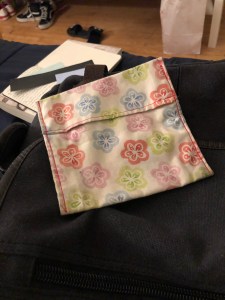
Kamilla, a former student recently reached out, wondering if we might be able to share the instructions for how to sew a “magic bag.” When she was in middle school, Kamilla and her friends all learned how to sew these cloth bags with Ms. Toupin at The Studio at Mayeda, in order to reduce the use of plastic bags at school. Ms. Toupin was thrilled to hear Kamilla’s special request and worked up the instructions for anyone who might enjoy a crafty way to cut down their plastic use. Try making your own to give out as gifts to friends. Instructions for Ms. Toupin’s DIY Magic Bag: https://archive.org/details/ms-toupin-diy-magic-bag/mode/2up
#7: SPREAD JOY — THE DEL SOL STRING QUARTET & THE JOY PROJECT
Music is good medicine that can spread joy, build human connections and bring us out into nature —The Del Sol String Quartet is bringing THE JOY PROJECT, free concerts in public settings around the Bay Area, where people can enjoy the music while safely practicing social distancing in the open air. Del Sol has commissioned a body of very short pieces written to give joy, by composers ranging from classical- music lions to young students and non-classical figures. Legendary composer Terry Riley responded with the rainbow arrow that has become the project logo. Join Del Sol’s “Joy list” for the latest information regarding locations and times to hear Del Sol play.
#8: DO YOUR DANCE — THE “FAM DANCE JAM”
We all try to do our best to get out an exercise, but sometimes it’s nice to mix things up with a fun alternative. When artist/poet Flo Oy Wong turned 82, she told her friends Mara and Andi that she really wanted to celebrate with a dance party. We have such fond memories of celebrating Flo’s 75th Birthday with dancing in the street in 2013. This time, we made Flo a special 2020 Birthday Dance Megamix and set a date on Zoom. We boogied for twenty minutes non-stop and had such a good time that we are already planning the next dance party. This time, Flo can’t wait to invite her family to join the JAM. Celebrate good times with the people who make your heart dance! Work off a bit of that holiday meal and savor a slightly bigger slice of pie with your Sistas!
#7: SING OUT — EQUAL JUSTICE SOCIETY “HARRIET TUBMAN”
Steve Porter the artist works big. His mural projects seem to grow exponentially with each new attempt… 48’… 88’… Steve’s newest project is around 145 feet long! Sometimes, Steve lets his imagination run wild, working for days on end, before inviting the public to add the color as they did on “One Spring Day.” But while working in the schools in Shreveport, Louisiana, Steve Porter the art teacher set his sights on an even bigger challenge — How to involve all the children who had not previously had the chance to participate? With the support of teachers and paraprofessionals, the children shared their talents when they created the 360′ long “This Ability” Mural. Steve says, “I believe that we all have the ability to make a positive difference in a child’s life. When given the opportunity to do something, then do it — advocate for, speak for, and fight for those that are so often overlooked.”
#11: SHARE YOUR STORY — “BLAKE MINI LIBRARY”
In 2016, young Blake Ansari constructed and donated a rainbow-colored mini-library to the students at Rooftop School who, in turn, assembled and donated the library to the Hamilton Families shelter in San Francisco’s Tenderloin neighborhood. For the past 5 years, ArtsEd4All has hosted the annual Blake Mini Library Book Drive, inviting San Francisco school children to join Blake in his efforts to bring the joy of reading to homeless children. This year, the COVID-19 pandemic will require an alternative approach. This year, please share your love of reading by purchasing a book or two through the ArtsEd4All Bookshop. The Bookshop affiliate program pays a 10% commission on every sale, and gives a matching 10% to independent bookstores. All ArtsEd4All Bookshop proceeds from MLK Day to Valentine’s Day will be applied to the purchase of a special delivery of books for the Blake Mini Library at Hamilton Families shelter. Antigone reminds us that we must support our local bookshops and video stores, with her story of kindness, an appreciation of artist Michael McConnell, and Faye’s a tiny, magical local establishment that deserves to stay alive and thrive.
#12: SMILE MORE — “BLUE MIND” & BLUE MARBLE SMILES
“To develop a complete mind: Study the science of art; Study the art of science. Learn how to see. Realize that everything connects to everything else.” – Leonardo di Vinci.
The Blue Marbles Project set out to pass a blue marble through every (yes, every) person’s hand on earth, along with a simple message of gratitude. This slow-motion global art project is a clear reminder that everything we do on this little blue planet matters. Through art, science and technology, Dr. Wallace J. Nichols is helping people to better understand the true value of water. “J” collaborates with a dedicated network of Blue Mind ambassadors, including Margaret, who is using her tech expertise to show that a smile really can create a ripple effect of kindness. Blue Mind research shows that nature is therapeutic, promotes general health and well-being, and blue space in both urban and rural settings further enhances and broadens cognitive, emotional, psychological, social, physical, and spiritual benefits. “This deep biological connection has been shown to trigger an immediate response in our brains when we’re near water. In fact, the mere sight and sound of water can induce a flood of neurochemicals that promote wellness, increase blood flow to the brain and heart and induce relaxation. Thanks to science, we’re now able to connect the dots to the full range of emotional benefits being on, in, or near the water can bring.” Our mission is clear: see to it that all people understand, have access to and practice Blue Mind wherever they are, because water is medicine for our bodies and minds. Our waters are a gift that we must work together to protect, as we are reminded after this tragic fire season that has upended so many lives, including that of The Nichols Family.
Do you know someone who would like to help to create a groundswell of support for Blue Mind?You can support J on Patreon, and give the gift of Science. Sign up as a patron at any level, starting at $1/month ($12/year).
ArtsEd4All would also like to express our thanks to The Antidote Team for allowing us to share their beautiful and inspiring film, THE ANTIDOTEwith our community.
I speak for the sea turtles closing their eyes ready for peace.
I speak for the ocean which is getting more polluted every day.
I speak for the ocean life clinging on to life.
I speak for the trees which are being cut down.
I speak for the animals which are dying out.
I speak for the streams turning to plastic.
I speak for the fish breathing their last breath.
I speak for the overheating planet.
I speak for earth, the planet with only a few chances left
I speak for life.
– by Owen B., 4th Grade
Rooftop kids have been learning about the state of the world’s oceans and creating their own art to advocate for their planet and the oceans through our participation in The Blue Marble Project with the support of the project’s founder, Bay Area ocean scientist Wallace J. Nichols.
We began this ocean advocacy project after receiving our first Blue Marble from Dr. J at a 2010 presentation on the impact of the Deepwater Horizon oil spill on life in the Gulf. Since then, every Rooftop K-8 student has received their own Blue Marble. Our kids have been learning about the health of our oceans and they are all encouraged to find something that they would like to do to help. This year, Rooftop students at the Burnett Campus decided to organize a recycling program that they called, “Save the Wave.” Students began monitoring and collecting lunchtime refuse, and this effort turned trash into cash with the help of Terracycle. In half a year, Rooftop’s “True Blue Angels” collected and kept these items out of the landfill:
3,098 Drink Pouches
183 Elmer’s glue
107 Ink cartridges
1,817 Ziploc bags
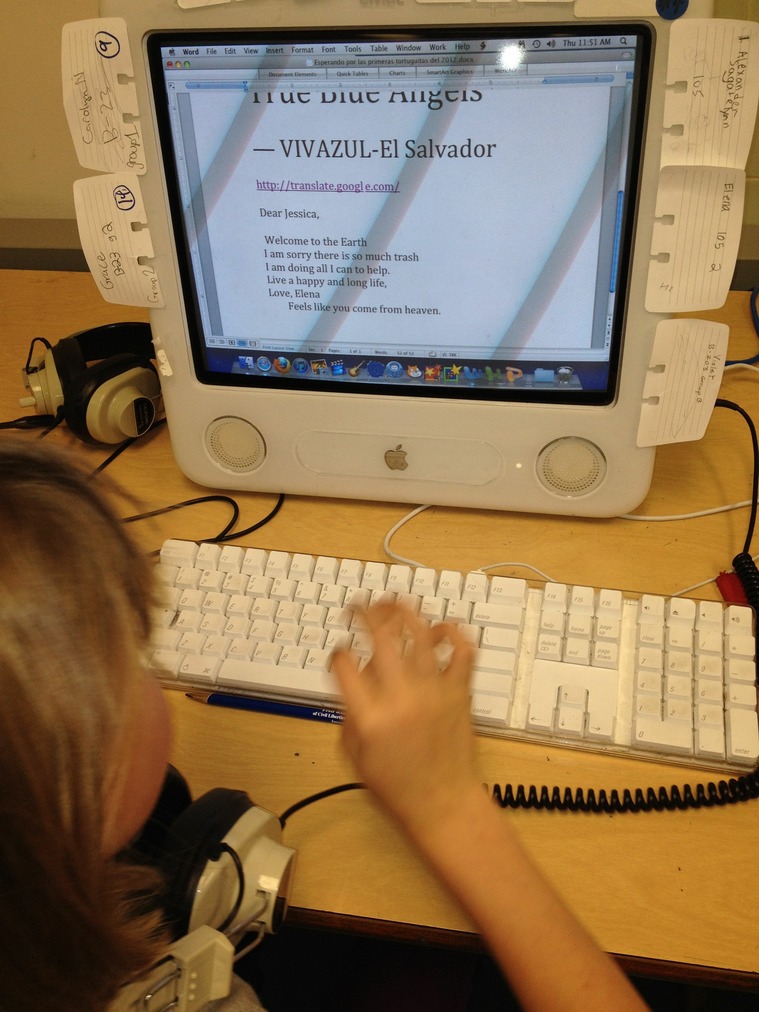
The income that the students earned from recycling went to benefit their school, and a matching donation was made to Plant-a-Fish, to sponsor a sea turtle nest in El Salvador. Thanks to Vivazul El Salvador, we were able to see photos of our newly hatched 60 olive ridley sea turtles through the internet. Needless to say, Rooftop students are growing up learning to love sea turtles.
Rooftop Alternative K-8 School is traveling all over our Wonderful World with a little help from our friends, families and Dr. Wallace J. Nichols’ Blue Marble Project. http://www.bluemarbles.org
Help us to make the world a little smaller, as we teach our students how to help our Ocean Planet.
Student in the computer lab are learning about geography, mapping, ocean conservation and more, through The Blue Marble Project. Our friends are helping by sharing their adventures through photographs and correspondence.
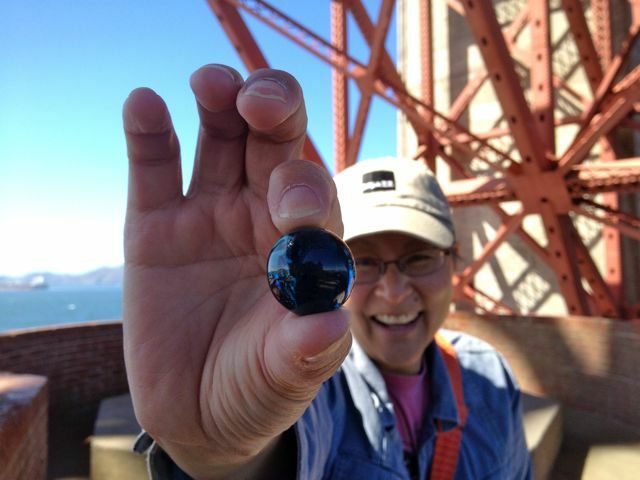
When you get your Blue Marble, you’ll know what to do! Think about what the ocean means to you, and what you can do to live like you love the ocean. Share your thoughts and adventures with your friends at Rooftop. When you are ready, pass your Blue Marble on to someone new, with the instructions that they should do the same.










 ArtsEd4All