Happy Lunar New Year!

Yin-Yang-5th-Grade

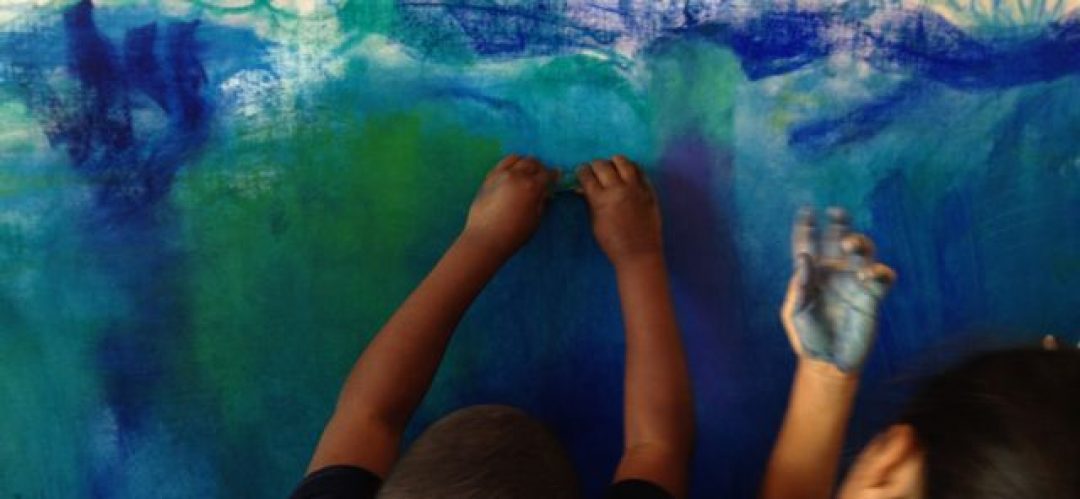
The terms yin and yang originated in ancient Chinese philosophy. Yin and yang mean literally the “dark side” and the “sunny side” of a hill. In Chinese and much other Eastern thought, they represent the opposites of which the world is thought to be composed: dark and light, female and male, Earth and heaven, death and birth, matter and spirit.

Yin yang drawings created by Ms. Hamilburg’s 5th graders at Rooftop School.


Susty Kids & Blake Mini Library Valentine’s Day 2016 Book Drive

lead_large“When you listen to the community, learn from the community, and help the community, you connect to your best self.”

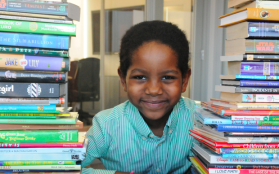
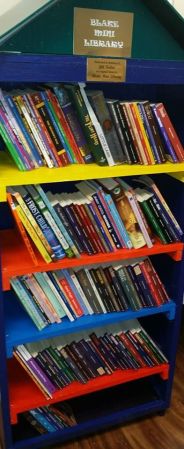
December 2013, at the age of six, Blake Ansari decided to help end poverty by donating a Blake Mini Library to homeless shelters and food banks. Blake Mini Library supports the reading, writing and science literacy of children ages birth to 21 living in homes for runaways, homeless shelters and foster care. On Valentine’s Day 2015, Blake Mini Library donated 6,000 books to Women in Need, Inc., Brooklyn, New York.  This 2016 Valentine’s Day recipients of Blake Mini Library are Hamilton Family Center, San Francisco and Riverside Church Food Pantry, New York City.

This year, Susty Kids, Inc. joins Blake Mini Library to help improve the literacy of homeless children in San Francisco.
1979571_840584775967309_1622274266_n

10491224_654761778002367_2452349480978761792_nOur Coast-to-Coast Blake Mini Library book drive officially begins on Monday, January 18, Martin Luther King Jr. Day of Service.

Please join us by donating new and recently new books (no cloth books) to children from birth to age 21. Give children who are homeless a Blake Mini Library.

For additional information contact: blakedesouza@verizon.net or 646-285-1068

Like and Share Susty Kids, Inc. and Blake Mini Library book drive successes on Facebook.

#blakeminilibrary #‎youthphilanthropy‬ #‎literacy‬

#nomorehomelesschildren #‎youwillgotocollege

Click for a downloadable Blake Mini Library Flier

Additional Information & Resources:

The rising cost of living and stagnant wages of New York City has resulted in The City having the highest number of children in America living in homeless shelters. Forty percent of shelter residents are children.  

In San Francisco, the technology boom has displaced working-families for high income young professionals.  San Francisco has the second highest rate of homeless children in the nation.  Thirty percent of San Francisco’s homeless are children.

  • Opening Doors, updated and amended in 2015, is the nation’s first comprehensive Federal strategy to prevent and end homelessness. Goals include preventing and ending homelessness for families with children and youth in 2020.

https://www.usich.gov/resources/uploads/asset_library/USICH_OpeningDoors_Amendment2015_FINAL.pdf

  • Coalition for the Homeless State of the Homeless 2015 – New York City

http://www.coalitionforthehomeless.org/wp-content/uploads/2015/03/SOTH2015.pdf

  • 2015 San Francisco Homeless Count Report

http://sfgov.org/lhcb/sites/sfgov.org.lhcb/files/2015%20San%20Francisco%20Homeless%20Count%20%20Report_0.pdf


Cultural Exchange: Kung Fu Panda 3

With the success of the 2008 animated film Kung Fu Panda, Chinese moviegoers praised the film’s depiction of Chinese culture and careful attention to details, “from the martial arts scenes to its depiction of family expectations and how the ancients were believed to pass into the afterlife.”  Wu Jiang, president of the National Peking Opera Company, told the official New China News Agency, “The film’s protagonist is China’s national treasure and all the elements are Chinese, but why didn’t we make such a film?”

Now, eight years laterKung Fu Panda 3 is DreamWorks’ first official U.S./China co-produced film opening simultaneously in the US and China on January 29Po the kung fu-fighting panda, Oogway, Shifu, and the Furious Five return in Kung Fu Panda 3.

Thanks to the San Francisco Film Society’s Education Program, Kung Fu Panda comes to Rooftop School. On Friday, January 8th at 12:30pm, 3rd, 4th and 7th grade students will attend a special presentation with Kung Fu Panda 3’s producer Melissa Cobb and co-directors Alessandro Carloni and Jennifer Yuh Nelson (who has the distinction of being the first woman to direct a big-budget animated film for a major studio).

The film’s creative team will share how the Kung Fu Panda 3 artists researched China’s culture (architecture, food, clothing, and, of course, kung fu!) for the film. The artists were also inspired by China’s natural beauty, the country’s distinct landscapes and wildlife — including the endangered golden monkey, South China tiger, red panda, and Giant pandaWe’ll get a peek at scenes from the new movie, enjoy a drawing demonstration and Q&A with the filmmakers.

wp_kpf3_01_1920x1440

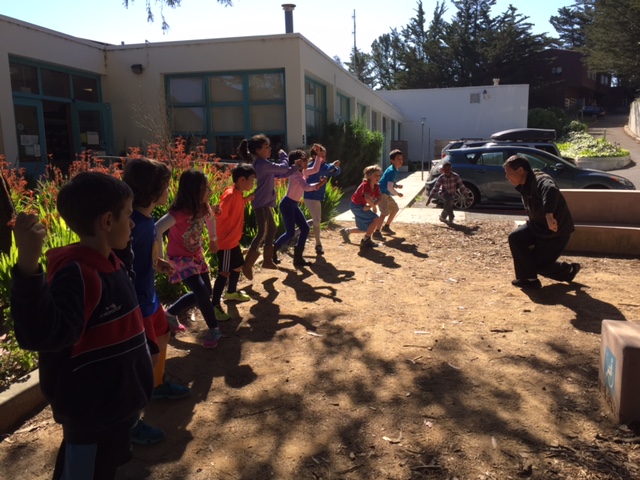
Weather permitting, the entire school is invited to come to the circle for a post-presentation performance which will include a Shaolin animal-style kung fu demonstration with special guests.

There will also be an art activity available for all classes to make their own bolang gu, a Chinese rattle drum, one of the earliest toys dating back to the Song Dynasty (960-1279). Practice playing your drum with friends and use your power to speak up for Giant Pandas.

Kung Fu Panda Art

Meet the Characters of Kung Fu Panda

Meet the Creative Team

Jennifer Yuh Nelson

Alessandro Carloni

DreamWorks Animation invited artists, photographers, designers and illustrators worldwide to create art that illustrated Po on his journey home for Kung Fu Panda 3. Inspired by Po, his friends and all the amazing places around the world, artists went straight to work and submitted over 400 stunning submissions of Po in different continents. Whether he was fighting bulls in Spain, trying on some lederhosen in Munich, riding the train in New York, or even attending a festival in India, Po popped up in almost every landmark around the world.

Five Animals Kung Fu

The foundation of the Southern Shaolin martial art systems can be attributed to these five animals – Snake, Tiger, Leopard and Crane, and the mythological Dragon.

Part of the kung fu student’s training is to emulate the spirit and the movement of these animals. They are instructed to visit the city zoo and the library to study the quintessence nature of the animal.

image1

Sifu Young Wong of the EY Lee Kung Fu School teaches third graders some animal style kung fu.

Panda Resources & Links:

Explore.org: Happiness Village – Pandas in Gengda, China

Chengdu Research Base of Giant Panda Breeding: Panda Live

National Zoo: Giant Panda Cam


Nature Works Everywhere: Virtual Field Trip to China’s Great Forests

Join expert scientist Yue Wang, a conservation planning officer for The Nature Conservancy, on a virtual field trip across the world to two stunning provinces in China—Sichuan and Yunnan. Explore majestic forests, towering mountains, and other iconic landscapes. While examining the role these vital natural areas play in the carbon cycle and climate change, as well as the benefits of reforestation, we will learn about the magnificent creatures who call these habitats home: giant pandas, golden snub-nosed monkeys, and the elusive and odd-looking takin.


World Wildlife Fund: What is the story behind the panda logo of WWF?

panda_logo_history_large_350984

Aware of the need for a strong symbol that would overcome all language barriers, founders of the World Wildlife Fund chose the Giant Panda. “We wanted an animal that is beautiful, is endangered, and one loved by many people in the world for its appealing qualities.” The black-and-white panda has since come to stand as a symbol for the conservation movement as a whole.

NEAT: New Experiments in Art and Technology

“Each wave of art and technology starts with a real or imagined discovery: land, gold, atomic elements, hallucinogens, circuits, algorithms.  As Timothy Leary allegedly observed: “California is the end of the genetic runway.” The Northern California / Bay Area Art and Technology counterculture paves that runway with a true love of science and engineering, a deep resistance to authority, and an undaunted belief in Power to the People. The Bay Area is quick to forgive and embrace projects that don’t go the way they were intended. This ecosystem has evolved to explore, experiment, and to express ideas that could not be expressed before.” 

— From “Art Technology and Bay Area CounterCulture” by Ken Goldberg

This slideshow requires JavaScript.

NEAT: New Experiments in Art and Technology at the Contemporary Jewish Museum features nine Bay Area artists, representing three generations of practitioners. Each artist has been commissioned to make a new piece, or update an older artwork, that demonstrates how digital programming is a central, yet just the latest, tool for artist creativity.


GUIDING QUESTIONS

  • How is the work of an artist similar to the work of a scientist?
  • What are the similarities between artistic and scientific processes?
  • What are the similarities between the materials used by artists and scientists?
  • What role does art play in our lives?

NEAT RESOURCES

CJM’s NEAT Online Exhibition Catalog features photos of the works of art and video interviews with the artists, as well as timeline & essays from curator Renny Pritikin, and digital artists Ken Goldberg and Jenny Odell.

NEAT offers playful ways to examine creative applications of STEM concepts for a true STEAM approach. The NEAT Educator Resource Guide offers a visual analysis of selected artworks and links the works to broader concepts in programming, engineering, science, and mathematics. This curriculum provides both arts-based resources as well as STEM-inspired activities to explore the technologies used by the artists in NEAT. Each module in this resource is grounded in the principles of the relevant Next Generation Science Standards and connects to scientific method-inspired processes of observing, hypothesizing, experimenting, and interpreting.

On the field trips, students played with Light Play, an activity created by the Exploratorium’s Tinkering Studio that encourages exploration of light, shadow, and motion using a variety of simple materials and light sources. Beginning with gently guided explorations of shadows, single and multiple light sources, three-dimensional objects and translucency, participants gain the proficiency and “light vocabulary” to express their ideas, and their creativity is sparked. They work toward building kinetic light and shadow vignettes, and eventually combine them into a collaborative installation.

This slideshow requires JavaScript.

  • The Tinkering Studio’s Light Play lets you explore light, shadow, and motion using a variety of simple materials and light sources. Beginning with gently guided explorations of shadows, single and multiple light sources, three-dimensional objects and translucency, participants gain the proficiency and “light vocabulary” to express their ideas, and their creativity is sparked. http://tinkering.exploratorium.edu/2015/10/02/light-play-fablearn
  • Scratch A project of the Lifelong Kindergarten Group at the MIT Media Lab. It is provided free of charge. https://scratch.mit.edu/

ONE SCHOOL, ONE BOOK – ON A BEAM OF LIGHT

On_A_Beam_of_Light

Rooftop Librarian Tamra Marshall invites classrooms to participate in a One School, One Book event in conjunction with the NEAT exhibit. Tamra has selected a picture book, On a Beam of Light: A Story of Albert Einstein by Jennifer Berne and Vladimir Radunsky, which makes wonderful connections to the spirit of this exhibit. Teachers will receive a copy to be added to each classroom library and determine how to connect it to their grade level or content area. A goal will be to forge a Burnett – Mayeda connection as teachers across the grades to reach out to each other and share how they used the book.

Lib Guide http://sfusd.libguides.com/profile.php?uid=94182

  • EarthKAM is a NASA educational outreach program that enables students, teachers, and the public to learn about Earth from the unique perspective of space. During Sally Ride EarthKAM missions (periods when the Sally Ride EarthKAM camera is operational), middle school students around the world request images of specific locations on Earth. View photos taken from the International Space Station by Rooftop students from “Mission 50” (November 10-13, 2015).
  • Your Star – A temporary public artwork by artist Olafur Eliasson that celebrates knowledge, dreams and light. The bright new star will shine in the sky above Stockholm to mark Nobel Week (December 6-12). The website features six videos which follow the emergence of an idea and its journey towards becoming an artwork. The site also offers visitors the opportunity to make their own stars in the virtual night sky. http://www.olafureliasson.net/yourstar/
  • Illuminate San Francisco – Any night of the year, you can embrace the power of light and enjoy exploring the city’s many neighborhoods with luminous public artworks by some of the world’s most notable light artists – including Jim Campbell, Ned Kahn, James Turrell and Leo Villareal. Best yet, these brilliant light art installations are accessible by public transport and free for all. http://illuminatesf.com/


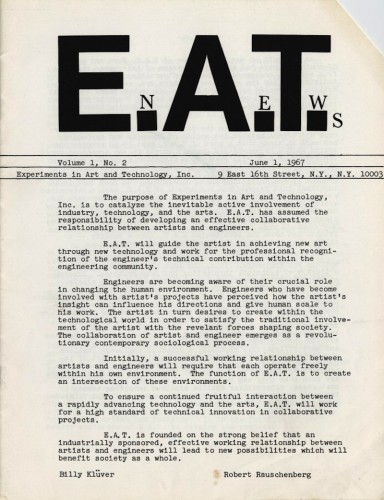
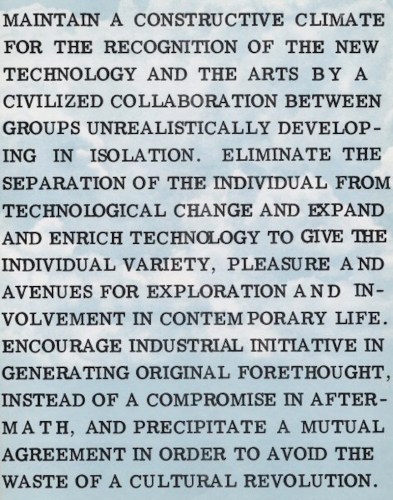
E.A.T. –Experiments in Art and Technology (1967)

The 1960s program Experiments in Art and Technology (E.A.T.) was a turning point in art’s relationship with science as artists and scientists worked together on new, creative projects. In 1967, Experiments in Art and Technology (E.A.T.) was officially launched by Billy Klüver and Robert Rauschenberg after having collaborated for many previous projects, notably the festival «9 Evenings: Theater and Engineeering. 

A Brief History and Summary of Major Projects 1966 – 1998  http://www.vasulka.org/archive/Writings/EAT.pdf

  • E.A.T. – Children and Communication (1971)

For Children and Communication, Robert Whitman designed environments where the children could freely access facsimile machines, electro-writers, telex machines and telephones. For four months, more than 500 children typed or hand-wrote messages, sent pictures and talked to children at another location, children from other areas of the city they would not normally meet. http://www.mediaartnet.org/works/children-and-communication/

  • Leap Before You Look: Black Mountain College 1933–1957 bit.ly/1KAs8NS

Crossroads and Cosmopolitanism at Black Mountain College chronicles the stories of fifteen students & teachers, including NEAT’s Robert Rauschenberg & San Francisco artist Ruth Asawa. http://mappingbmc.org/

  • Ruth Asawa: “Transforming the Ordinary” at Rooftop School

In the Spring of 2004, Rooftop School focused on the art of artist and arts advocate Ruth Asawa (1926-2013). https://youtu.be/4z-Amx8dcFM

EAT News - Volume 1, 1967EAT Statement of Purpose, 1967

Follow the Water

“When I was orbiting Earth in the space shuttle, I could float over to a window and gaze down at the delicate white clouds, brilliant orange deserts, and sparkling blue water of the planet below. I could see the coral reefs in the oceans, fertile farmlands in the valleys, and twinkling city lights beneath the clouds. Even from space, it is obvious that Earth is a living planet.” — Dr. Sally Ride

Sally Ride EarthKAM is a NASA educational outreach program that enables students, teachers, and the public to learn about Earth from the unique perspective of space.  The project was initiated by Dr. Sally Ride, America’s first woman in space. The EarthKAM camera was first operated on the International Space Station (ISS) on Expedition 1 in 2001. Sally Ride died in 2012, and in 2013, NASA renamed the program Sally Ride EarthKAM. The Sally Ride EarthKAM camera remains a permanent payload on the ISS, supporting about four missions annually. EarthKAM’s Mission 50 took place between November 10-13, and students around the world were able to request images of specific locations on Earth.

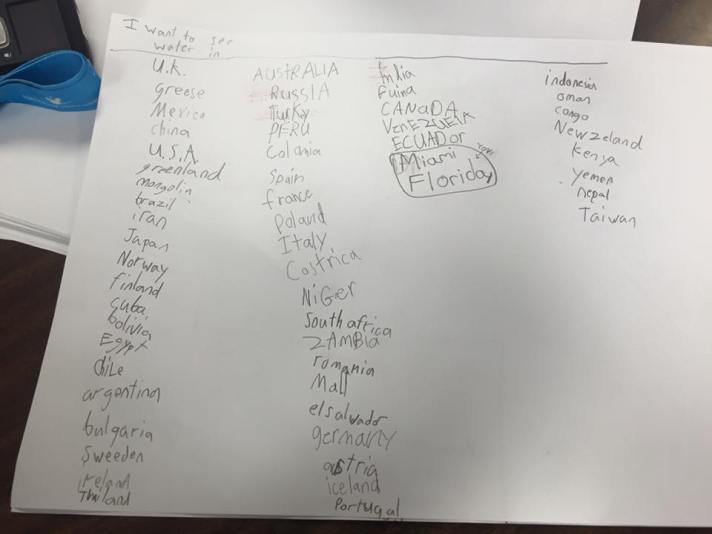
NASA has a familiar adage: Follow The Water, for where there is water, there is life. For Mission 50, Rooftop School’s fourth graders made a list of the places where they would like to see water.

I want to see water in...

As Sally Ride noted, “The view of Earth is spectacular.”

This slideshow requires JavaScript.


From November 30 to December 11, 2015 COP21, also known as the 2015 Paris Climate Conference, will brings the world together with hopes of achieving a legally binding and universal agreement on climate, with the aim of keeping global warming below 2°C.

The Association of Space Explorers reached out to their fellow astronauts to pass on a simple message of solidarity, hope and collaboration to combat climate change and reach our political leaders during such a crucial time.

Cantastoria Cornucopia

Following up on the October 8th Bread & Puppet cantastoria workshop for San Francisco Unified School District, Clare Dolan kindly shares the following examples of International and American Cantastoria. Clare is the co-creator and festival curator for Banners & Cranks, an annual festival of cantastoria performance by artists and musicians from all over the United States, and the Chief Operating Philosopher of the fascinating Museum of Every Day Life in Glover, Vermont, whose goal is to explore, analyze and celebrate everyday life objects.

Contemporary International Cantastoria

Jhadpur Cantastoria

Sicilian Catastoria

Papel Machete

French Cantastoria

Documentary about the Belgali scroll painting singers

Bengali performers performing

Contemporary American Cantastoria

Takes After His Father – by Dave Buchen

As I Walked Out One Evening – by More of Everything Theater Company

Old Reliable Amusements – by The Dolly Wagglers

Bread & Puppet’s The Foot (narrated by Andrea diFrancesco)

Where’s My f-ing Bailout — by Clare Dolan/Museum of Every Day Life

St James Infirmary – by Blair Thomas

Happy Narouz – by Great Small Works

Hurricaine Manifesto – Clare Dolan/Museum of Every Day Life

Answers to 4 Questions – Clare Dolan/Museum of Every Day Life

Ballad of Jacob Apfelboek – Clare Dolan/Museum of Every Day Life

Mack the Knife – Meredith Miller

SFUSD / Bread and Puppet Theater: A Cantastoria Workshop at the Curran

“Our glorious civilization glorifies itself with what it calls high art. Puppeteers have no soul-searching trouble in that respect. What we produce has no ambition to be high art. Low art is what we make and what we want. Not the Fine Arts—the Coarse Arts are what we use.”

— Peter Schumann, lecture to art student at SUNY Purchase, 1987

IMG_5937


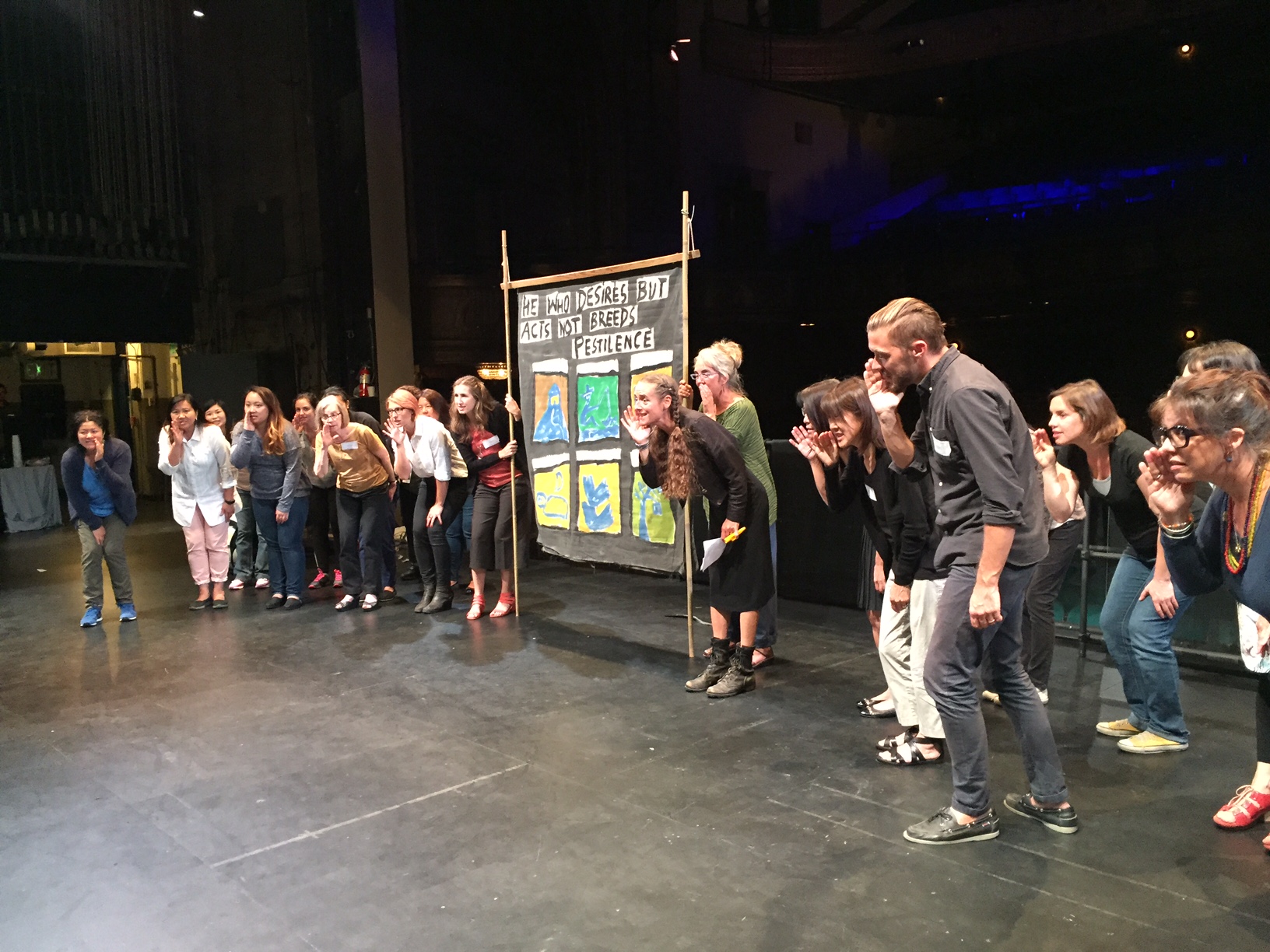
On Thursday, October 8, 2015, from 4pm-6pm, San Francisco Unified School District Visual and Performing Arts Department Elementary/K-8 and Secondary Arts Coordinators gathered on the stage of the Curran Theater for a Cantastoria Workshop, led by Clare Dolan and members of the 2015 West Coast touring company of Bread and Puppet Theater.

The workshop participants were welcomed to The Curran: Under Construction by Carole Shorenstein Hays, Greg Backstrom and Brian Farley. Andi Wong of Rooftop Alternative School spoke on the theme of “Inspiration,” having received a healthy dose of wonder at the Bread and Puppet Farm in Glover, Vermont, in advance of the troupe’s Bay Area visit. SFUSD Arts Education Master Plan Implementation Manager Antigone Trimis drew connections to student learning, school site culture and climate. After an introductory slide show about Bread and Puppet Theater and cantastoria by Clare Dolan, the art coordinators gathered on the stage of the historic theater to learn by doing.

Cantastoria is one of the oldest performance forms known to humans, originating in India more than two thousand years ago. It typically involved one or two performers, often performing on the street, and a multi-image scroll or a series of paintings mounted together at the top. Bread & Puppet Theater’s version of Cantastoria is usually performed with a narrator who points at the pictures and one or two “choruses” who respond to the narration. The subject of the cantastoria can be anything and directed to any age audience.

Clare Dolan and Bread and Puppet performers Esteli Kitchen, Joshua Krugman,Kali Therrien, Luis Gabriel Sanabria, MJ Hicks, and Tom Cunningham guided participants through the creation, narration and choral performing of this ancient art form.

Bread and Puppet Theater & Cantastoria / Common Core Connections

• Ensemble • Risk • Improvisation • Visual Literacy • Inquiry (necessary for the ensemble to create the piece, will bring added empathy for subject being presented) • Oral Presentation • Close Reading (visual and physical movement, etc, what is the ‘text’ in this work? For the performer? For the audience?) • Student Voice (primary in this work)

For additional information about Bread and Puppet Theater and Cantastoria:

• Bread and Puppet Theater http://breadandpuppet.org/

• The Internet Archive “Bread and Puppet Archive” is preserving 150 hours of video of circuses, pageants, passion plays, 250 puppeteers, and making it available to the public. https://archive.org/details/breadandpuppet

• “Ah! The Hopeful Pageantry of Bread and Puppet” by Dee Dee Halleck and Tamar Schumann https://archive.org/details/ah_the_hopeful_pageantry_of_bread_and_puppet

• “About Sung Paintings or Cantastoria” by Clare Dolan, Museum of Every Day Life http://museumofeverydaylife.org/wp-content/uploads/About-Sung-Paintings-or-Cantastoria3.pdf

• Clare Dolan answers the question: What is cantastoria?
https://youtu.be/_kEVoCsgsS0

• Clare Dolan & Bread and Puppet Theater perform “The Sky” (2007). https://youtu.be/NcmvHzeLwvY

• Banners and Cranks: a traveling cantastoria & cranky festival http://bannersandcranks.org/

A Feast with Bread and Puppet

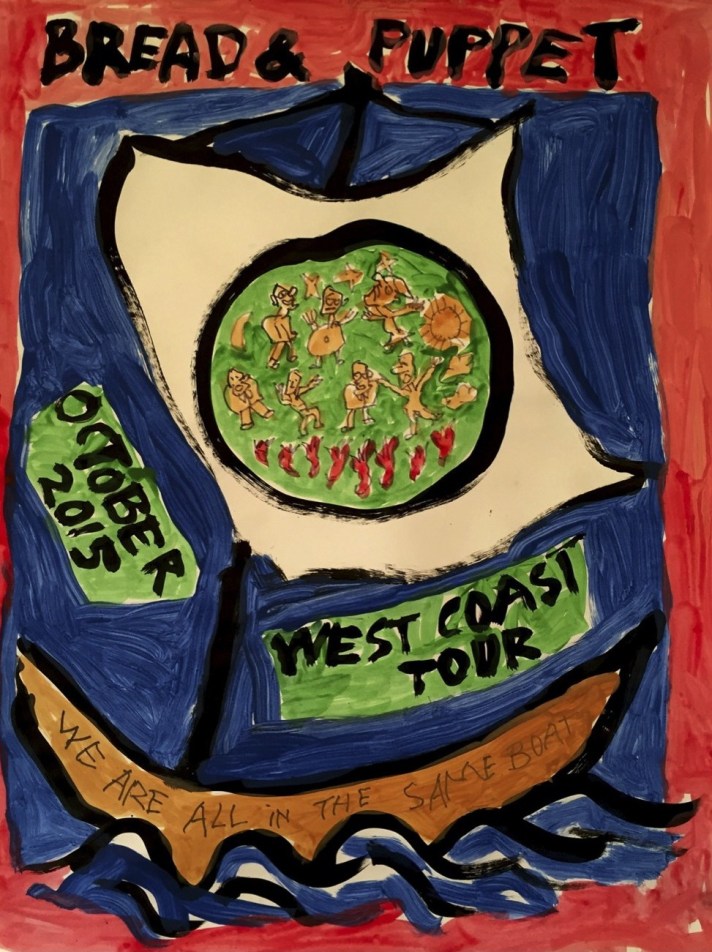
For the first time in fourteen years, artist Peter Schumann and Bread and Puppet Theater tour the West Coast with a series of performances, workshops, lectures, exhibits and parades. Enjoy a feast of Bread and Puppet events in the Bay Area from October 7th – October 13th.

Visit the Internet Archive for additional events and information.

Dolores Parade
“We are All in the Same Boat” by Peter Schumann. 2015.

Jingles & GiantsPop-Up Exhibition featuring Bread & Puppet Press books of all shapes and sizes, from the diminutive many-volume Jingle Book series, to the one-of-a- kind handmade Giant Books, drawn in charcoal on large-format pages with sewn cardboard covers. Free to the Public. sfcb.org/jingles-and-giants


postcard_4x6_frontFIRE at the Internet Archive

Friday, Oct 9, 7pm. 300 Funston Ave, San Francisco. Friday, Oct 9, 7pm. (Pre-show reception begins at 6 pm)

6:00 p.m. – Pre-show Reception and sale of the company’s “Cheap art” 7:00 p.m. – Performance proceeded by a Fiddle Talk by Peter Schumann and followed by a Bread Reception. Celebrate the dedication of the Bread & Puppet Archive with Internet Archive founder Brewster Kahle and filmmaker Dee Dee Halleck.

Tickets $20 or donation. brownpapertickets.com/event/2227297

No one will be turned away due to lack of funds.                                            

Please Note: This show may not be appropriate for young children.

Fire was originally created in 1965 and later dedicated to three Americans who immolated themselves in protest against the war in Vietnam. Fire is a glimpse into seven days in a Vietnamese community which is incinerated by firebombs, followed by a scene referencing the protest self-immolations. Fire is performed with life-sized puppets which resemble their manipulators.

George Dennison, author, educator, and longtime observer of Bread & Puppet, said: “To some extent (Fire) is a service to the dead. Beyond this it manifests certain of the deep premises of the human condition, the inequitableness of life, our dependencies on each other, the social nature of the self.”

Additional Bay Area Performances:

FIRE at Omni Commons, 4799 Shattuck Ave, Oakland. Tues., October 6th, 7pm. brownpapertickets.com/event/2298620

FIRE at Sebastopol Grange, 6000 Sebastopol Ave, Hwy 12, Sebastopol. Weds., October 7th, 7pm. brownpapertickets.com/event/2227275


©2012. Mark Dannenhauer. No commercial use without license. 16 Wilson Road, Shutesbury, MA 01072 413-259-1096.
©2012. Mark Dannenhauer

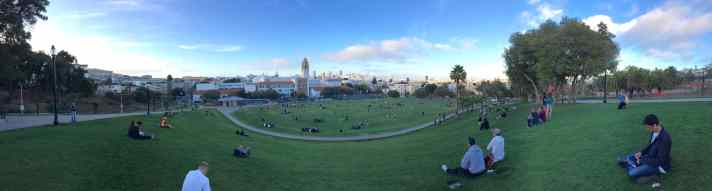
We Are All in The Same Boat: A Parade at Dolores Park

Saturday, October 10, 2pm; Parade participants are welcome — wear white and meet at 1 pm, look for the big banners and boat!

Bread and Puppet will lead the We are All in the Same Boat parade with volunteers, musicians and community members, asking a provocative question for the Bay Area in 2015: “What if we could all swim together?”

Your artistic contributions are welcomed. In the words of Bread and Puppet founder Peter Schumann, “The more the merrier.” Signs, banners, musical instruments created from ordinary objects that can be used in the parade, and, of course, puppets! When creating art, use Nature as your inspiration. Think of the millions of creatures that live in the ocean or fly above the ocean.

Dolores Park small


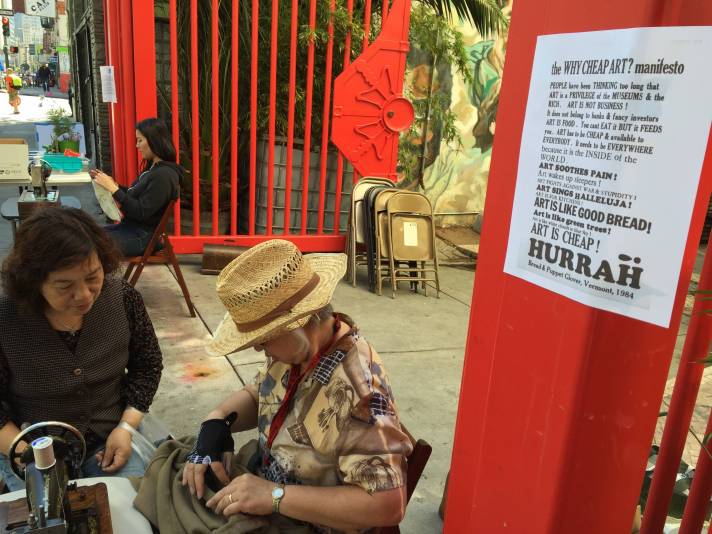
Play with Bread & PuppetBread & Puppet Cantastoria performances in the Tenderloin National Forest with bread and aioli; stew made “Fresh from the Oven” by Amara Tabor Smith; sewing with The Mending Library. In the Luggage Store Annex Gallery: Bread and Puppet’s “Cheap Art” Sale and art activities for children with ArtsEd4All. Free and open to all. luggagestoregallery.org

Why Cheap Art


Play and Partnership: Celebrating the 2015 International Day of Peace

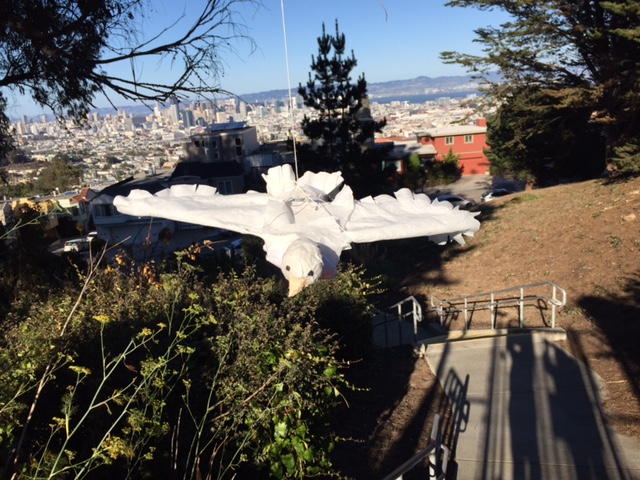
Play and partnership can help us to imagine and create more peaceful world. On Monday, September 21, the students and teachers at Rooftop School will gather for a moment of peace at Morning Circle. We will fly the peace dove puppets made by third and fourth graders to mark the day with Roots and Shoots, Jane Goodall’s youth-focused organization.

“Every individual matters. Every individual has a role to play. Every individual makes a difference.” — Jane Goodall, With Love (1999)

When Dr. Jane Goodall was just over one year old, her father gave her a toy chimpanzee named Jubilee, in honor of a baby chimpanzee born at the London Zoo. Friends warn her parents that such a gift will cause nightmares for a child. However, Jane loves the toy carries it with her everywhere. Today, Jane travels with a stuffed monkey named Mr. H, who has been touched by over 2.5 million people from around the world and visited more than 60 countries with Jane.

Understanding the power of children in the conservation movement, Jane Goodall spoke directly to youth in this 2008 video interview.

As a United Nations Messenger of Peace, Dr. Jane makes it a priority each and every year to observe and celebrate the annual International Day of Peace on September 21. One of the ways that students can celebrate the day is by building a Peace Dove Puppet.

IMG_4973

Instructions for small and giant puppets can be found on the Roots and Shoots website.

This slideshow requires JavaScript.

Dr. Goodall encourages individuals around the globe to participate in the United Nations International Day of Peace which is celebrated on September 21 each year. This year, an especially auspicious one with the UN’s celebration its 70th anniversary, will have the theme of, “Partnerships for Peace – Dignity for All.” Click here to learn more about Dr. Goodall’s role as a UN Messenger of Peace and how you can participate in celebrating in the annual Day of Peace.

Full Circle Teaching with Artist Flo Oy Wong

We are pleased to share another intergenerational art experience from visual artist FLO OY WONG, who previously shared a drawing and poetry experience looking at trees with her granddaughter’s classroom. This time, Flo leads a contour drawing lesson in her grandson’s second grade classroom. The lesson travels full circle, as her daughter-in-law and grandson slow down and take the time to see more with ‘Nai Nai.’
P1030867

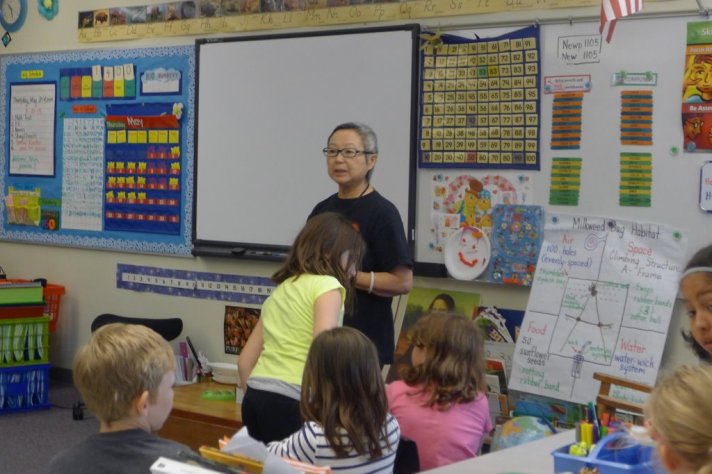
On May 21st, I had the privilege of teaching an art lesson in my 8 year old grandson’s second grade class taught by Margaret Haney. Having given art lessons in my granddaughter’s classes in Hastings on Hudson in New York I wanted to do the same for my grandson. Following my initial contact with Miss Haney we decided I would teach a blind contour dominant/non-dominant hand lesson with pencil and paper. I like teaching classes where clean up is minimum for both the homeroom teacher and myself.

My husband and I arrived at Newport Heights Elementary School in Bellevue, WA in plenty of time for the morning lesson. We checked in at the office and waited for our grandson to escort us to his classroom. I was excited to see his school environment. Walking into Miss Haney’s class I found a stimulating atmosphere. The children knew I was coming.
P1030871

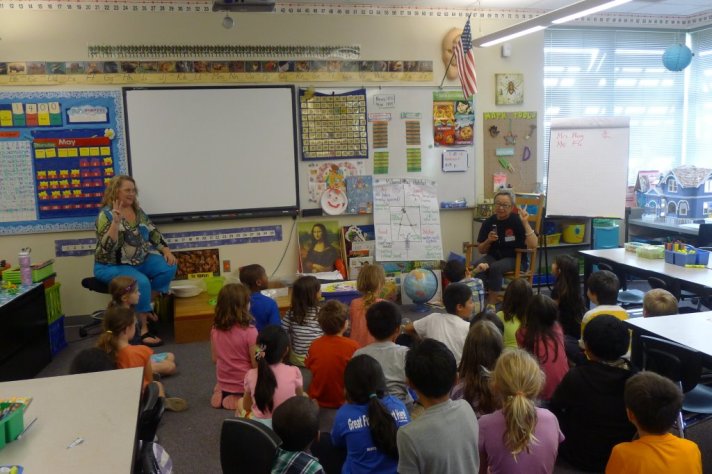
Settling in, I introduced myself as my grandson’s ‘Nai Nai,’ my husband as ‘Yeh Yeh.’ I told the eager children they could call me Mrs. Flo. Or maybe it was Mrs. Wong. I wrote my Chinese name, telling the classroom my maiden Chinese name means red. I showed them my hearing aids, saying I am hearing impaired. They laughed when I explained that I talk fast and that they could stop me by collectively saying, “Whoa, Mrs. Flo.” Of course, they had to practice. Their hands shot up, pushing their palms and fingers towards me while saying, “Whoa, Mrs. Flo.” They laughed heartily, the first of many times of mirth while learning art vocabulary and practices. Miss Haney and I comfortably exchanged teaching ideas after the introduction. She suggested we switch to markers after I mentioned that I don’t allow erasing in my teaching.
P1030875

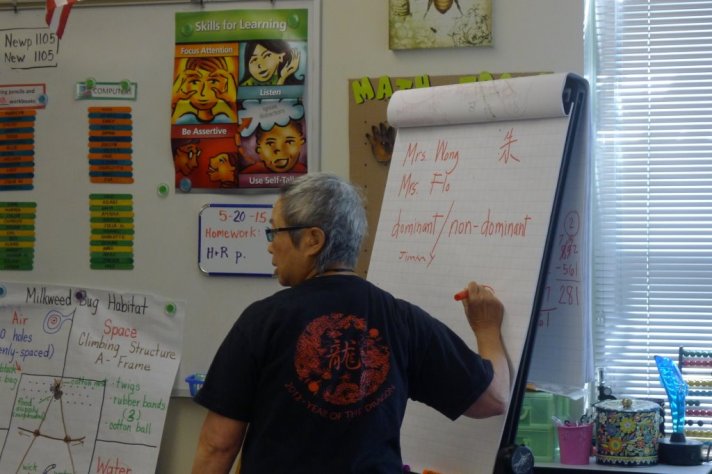
After telling the attentive children my job as an artist was to teach them to “see” I wrote the following words on the board: contour, blind contour, dominant, non-dominant. It is a special pleasure of mine to introduce and to expand the vocabulary of young students. I asked them to raise the hand they use almost all of the time, explaining that hand is their dominant hand. They caught on immediately. They didn’t need an explanation of non-dominant although I reinforced their knowledge by saying “non-dominant.” I showed them how to draw as if the tip of their markers were actually touching the outline of their subjects.

At the board I demonstrated a blind contour drawing with students sitting in front of me on the floor.  I showed them how to draw as if the tip of their markers were actually touching the outline of their subjects. “Don’t let me peek at the board.” The young girl whom I drew suddenly realized she was my model and sat at attention. When I finished the few lines the children smiled, hopefully in appreciation of what I had done without looking at the board.

Back at their desks I gave them short assignments, asking them to draw someone who sat near them starting with a blind contour dominant hand task.

“Don’t look at the paper,” I reminded them.

Their eyes, glued to their models, guided their markers.

This slideshow requires JavaScript.

Excitement built up as their lines wiggled and danced on the paper.

“Slow down,” I said when I saw their markers racing.

Miss Haney noticed some students were lifting their markers off the paper. She advised them not to lift their markers. They cooperated. Then she sat down to draw along with her pupils. Her drawing – beautiful.

All the results were highly satisfying. Giggles of joy filled the classroom.

Giving several short assignments meant they had to return to the front of the room for more listening. Some were deeply engaged and wanted to stay with their drawings.

The time flew.

In the meantime my husband had been taking photos. The children lined up to show me their drawings. When I looked at them with much appreciation I sent some to have their photos taken.

They returned one last time to sit at the front after completing several drawings. Several shared what they had learned. Some gave me one of their art work. Exhilarated and fatigued I left Miss Haney’s classroom sated with their energy even after visiting the upstairs classroom of the regular art teacher at Newport Heights Elementary School.

Following my art lesson in my grandson’s second grade classroom our family went to Orcas Island for the Memorial Day weekend.  Early in our stay I heard my grandson talking to his mother. I went into the living room to see my daughter-in-law drawing without looking at the paper. He told her how much fun the art lesson was and he encouraged her to try it.

“It’s fun,” he said.  “Easy.” So she posed for him.

I came out to join them after my grandson finished his blind contour drawing of his mother.  She and I continued drawing, taking turns to sketch and to pose for one another, always careful not to look at the paper.  She was surprised by what she captured.  In elementary school in China she had art lessons and had not drawn since.

By not looking at the paper she concentrated on me, carefully seeing me sitting on the couch wrapped under a throw.  In her many years as a family member she had seen me many times before.  She thought she knew what I looked like.  Being present in her observation during our art time together she was surprised by the clarity of her “seeing.”  She could see that the exercise of contour drawing put everyone in an equal position, lessening the gap between ordinary people and professional artists, adult and child.  Her son had passed it forward.  Perhaps one day she will pass it forward to someone else by telling them not to look the paper as they draw.

Two weeks later I received an email from my grandson’s mother. She forwarded me an email from Miss Haney. Miss Haney wrote “… I extended the learning to the afternoon students. The students in both classes had fun drawing each other, without taking their eyes off the subjects. I’ve included a sample on the back of this page…”

I don’t know which is sweeter – to see the second graders engaged in the process of artistic discovery with amazing results or to know that my grandson and his teacher continued the teaching.

Passing it forward as an artist and a teacher is highly rewarding.

Our gratitude to Flo Oy Wong and family and teacher Margaret Haney and her second grade students at Newport Heights Elementary School in Bellevue, WA for sharing their expressive art work and their thoughtful reflections about the experience of making art together. Photography by Edward Wong.